RESIDENTIAL / Choosing & Buying
Ceramic Residential Window Tint vs Metalized Dyed & Hybrid
Ceramic Residential Window Tint vs Metalized Dyed & Hybrid: compare film types for hot rooms, glare and fading and choose the right one.
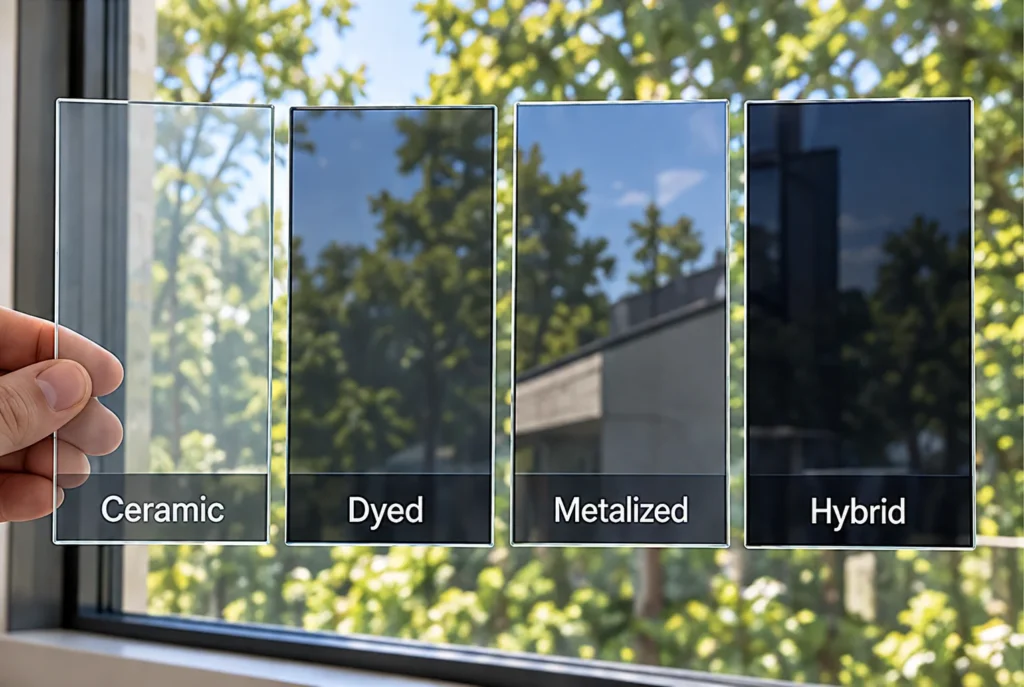
Windows can make a home feel open, bright, and comfortable. But the same glass can also bring strong afternoon heat, screen glare, fading, and rooms that feel much warmer than the rest of the house.
Window film can help, but choosing a film is not as simple as picking a darker shade. Ceramic, dyed, metalized, and hybrid films are built differently, so they can also behave differently on residential glass.
If you are comparing ceramic residential window tint, metalized window film, dyed film, or hybrid film, the right choice depends on what you actually want to fix: heat, glare, appearance, privacy, fading, or a combination of these concerns.
What Are the Main Types of Residential Window Tint?
The four names homeowners commonly come across are ceramic, dyed, metalized, and hybrid window film. The name usually refers to the technology or materials used inside the film rather than simply how dark the window looks.
That difference matters. Two films can look similar from across the room while offering a very different balance of solar control, reflectivity, visible light, and appearance.
The main categories are:
- Ceramic residential window tint: for a clean, low-reflective appearance and strong solar-control performance.
- Dyed window film: for basic light, glare, and appearance control.
- Metalized window film: for solar control with a more reflective appearance.
- Hybrid window film: for a balance of multiple film technologies.
Before choosing between them, think about the room first. A west-facing living room, bright home office, street-facing bedroom, and sunroom may all require a different film.
What Is Ceramic Residential Window Tint?
Ceramic window film uses advanced non-metal materials within its construction to manage solar energy while maintaining good optical clarity. It is commonly chosen when homeowners want solar control without making the windows look highly reflective.
This makes ceramic film particularly useful for homes where appearance matters. Large living-room windows, modern glass doors, home offices, and rooms with an outdoor view can benefit from a film that does not overpower the original look of the glass.
A ceramic residential window tint can help with:
- Excess solar heat entering through glass
- Bright afternoon glare
- Uncomfortable rooms near large windows
- Sun exposure that contributes to interior fading
- Maintaining a more natural exterior appearance
- Reducing the need for a highly mirrored window finish
Ceramic film does not automatically mean extremely dark tint either. Different ceramic products can have different visible-light levels, making it possible to choose solar control without turning a bright room into a dark space.
What Are the Different Types of Ceramic Tint?
When homeowners search for types of ceramic tint, they often expect completely different technologies. In residential applications, the differences are usually related to the film’s construction, shade, visible-light transmission, solar-control characteristics, and intended glass application.
You may see light ceramic films designed to preserve natural daylight, medium shades that create a more noticeable change, and darker ceramic films intended for stronger glare control.
Some ceramic window films also focus on keeping exterior reflectivity low. This can be useful on homes where a mirrored appearance would not suit the architecture or where homeowners want the windows to remain visually neutral.
The right ceramic option therefore depends on more than the word “ceramic.” The glass type, window orientation, amount of direct sun, desired appearance, and room use should all be considered.
What Is a Metalized Window Film?
Metalized window film contains extremely thin metallic components designed to interact with incoming solar energy. Depending on the product, this technology can create a more reflective appearance than ceramic or dyed films.
For a room receiving heavy sun exposure, this type of film can be a practical solar-control option. It is often considered when reducing solar heat and intense brightness is more important than keeping the glass almost unchanged in appearance.
A metalized window tint may be suitable when you want:
- Strong solar control for sunny windows
- Noticeable glare reduction
- A more reflective exterior appearance
- Better daytime visual screening
- A traditional solar-film look
However, the reflective look is not right for every home. A highly modern house may suit it, while a homeowner trying to preserve clear-looking architectural glass may prefer a ceramic, neutral, or other low-reflective film.
Does Metalized Window Tint Give Privacy?
Reflective metalized window tint can provide additional daytime privacy when exterior light is significantly brighter than the interior. From outside, the glass can appear more reflective, making the room less visible. That effect should not be treated as permanent one-way privacy.
At night, when lights are switched on inside and it is darker outdoors, the lighting relationship changes. People outside may still be able to see through the glass.
If nighttime privacy is the main goal, curtains, blinds, decorative privacy film, or another dedicated privacy solution may still be needed.
Our products
Six film families, one for every kind of glass
For ceramic and other solar-control films, start with Architectural Solar Control. Every family has its own page with the full range.
- Clarity IR Max
- Nano Ceramic
- Climate IQ 50
- Skyline
- Harmony DR
- Soft Tone
- Eco Silver 20
- X-Clear 70
- X-Eco Silver 15
- X-Hybrid DR 15
- Safety 4 Clear
- Security 8 Clear
- Security 8 Silver
- Security 14 Clear
- X-Safety 7
- AG 6 Clear
- Frost
- White Out
- Black Out
- Poly Layers
- V6 Comfort BLK
- V10 Ceramic IR BLK
- V16 Ceramic IR MAX
- V6 Core
- V10 Reactive
- V16 Velocity
What Is a Dyed Window Film?
Dyed window film uses color within the film construction to reduce visible light and create a darker appearance. It can be useful when excessive brightness or glare is the main concern.
A dyed film may make a room feel visually softer by reducing the intensity of incoming sunlight. It can also give windows a consistent tinted appearance.
However, darkness should not be confused with solar performance. A film that looks very dark is not automatically the right film for controlling the amount of solar energy entering through residential glass.
This is why homeowners should compare actual film specifications and intended use rather than choosing a product only because it appears darker.
What Is a Hybrid Window Film?
Hybrid window film combines more than one approach to create a balanced result. Depending on the product, manufacturers may combine technologies or layers to achieve a particular mix of solar control, appearance, glare reduction, and reflectivity.
Hybrid film can make sense when a homeowner does not need the specific characteristics of a fully reflective film or a particular ceramic product.
Think of hybrid technology as a middle-ground category rather than automatically assuming it is better than every other film. Its suitability still depends on the window, glass construction, exposure, and desired result.
Ceramic vs Dyed vs Metalized vs Hybrid Window Film
| Film Type | Appearance | Heat Control | Glare Control | Reflectivity | Often Considered For |
|---|---|---|---|---|---|
| Ceramic residential window tint | Neutral and clean | Strong solar-control options available | Good | Usually low | Homes where comfort and natural appearance both matter |
| Dyed Film | Darker or tinted | Depends on product | Good | Usually low | Reducing brightness and creating a darker appearance |
| Metalized window film | More reflective | Strong solar-control options available | Strong | Medium to high depending on film | Sunny windows and homeowners comfortable with a reflective finish |
| Hybrid Film | Varies | Balanced | Balanced | Varies | Homes needing a mix of appearance and solar-control characteristics |
There is no single film type that is automatically right for every window. A film that works well on one side of the house may be unnecessary or unsuitable on another side.
Which Film Is Better for a Hot Room?
If a room becomes uncomfortable when direct sun reaches the glass, start by looking at solar-control performance rather than tint darkness.
Ceramic and metalized window film are commonly considered for heat-control applications. The right option depends on how much natural light you want to keep, how reflective you want the glass to look, and whether the film is suitable for your existing glazing.
For example, a living room with a valuable view may call for a lighter, low-reflective film. A highly exposed window where brightness is also uncomfortable may benefit from a different balance of visible-light and solar control.
The best window film is not simply the darkest film. It is the film that matches the glass, sunlight, room use, and appearance you want.
Which Window Tint Is Better for Home Office Glare?
Home-office glare usually becomes noticeable when direct or reflected sunlight hits a computer monitor, television, or other screen.
A darker film can reduce visible brightness, but you should also consider how much daylight you want to keep during working hours. Going unnecessarily dark may solve glare while making the rest of the room less pleasant.
Ceramic, neutral, reflective, and other solar-control films are available in different shades. The goal is to create enough glare control without sacrificing more natural light than necessary.
Can Residential Window Film Help Protect Furniture and Floors?
Sunlight passing through windows can contribute to fading and discoloration over time. Furniture, hardwood flooring, rugs, artwork, photographs, and fabrics can all be affected by long-term exposure.
Residential solar-control film can reduce important factors involved in fading, but no window treatment can guarantee that fading will stop completely. If interior protection is your main concern, compare films based on their documented solar and UV performance rather than choosing by shade alone.
Keep reading
More window film guides for your home
Should You Choose Ceramic or Metalized Window Film?
Ceramic film may make more sense when preserving a natural, low-reflective appearance is important. Metalized window film may be considered when stronger reflectivity fits the property’s appearance and solar-control goals.
Instead of asking which technology is universally better, ask:
- How much direct sunlight reaches the window?
- Is heat or glare the bigger concern?
- Do you want the glass to remain visually neutral?
- Would a reflective exterior appearance suit the house?
- How much natural daylight should remain?
- What type of glass is currently installed?
- Is daytime privacy important?
- Is nighttime privacy also required?
These questions narrow the options much faster than choosing a film only by its name.
Window Film Must Match the Glass
Not every film should be placed on every type of residential glass.
Single-pane glass, double-pane units, coated glass, laminated glass, tempered glass, and Low-E glazing can behave differently when film is added. Window orientation and existing shading can also affect product selection.
For that reason, the film should be matched to the glazing system before it is applied. Product specifications, glass compatibility, application location, and warranty requirements should all be checked.
This is especially important when comparing types of ceramic tint, reflective products, and other high-performance solar-control films.
How to Choose the Right Residential Window Film
If the room feels too hot, focus on solar heat control. If screens become difficult to see, focus on glare. If furniture or flooring receives hours of direct sunlight, consider fade protection. If appearance matters most, compare reflectivity and visible-light levels.
A simple selection process is:
- Identify which windows are causing discomfort.
- Note when direct sunlight reaches those windows.
- Decide how much natural light you want to keep.
- Choose whether you prefer clear-looking or reflective glass.
- Confirm the existing glass type.
- Compare compatible window-film specifications.
- Use an experienced installer to confirm the final product selection.
This prevents you from choosing a film because a product name sounds more advanced while ignoring what the room actually needs.
Choose Film by Performance, Not Just by Name
Ceramic, dyed, metalized, and hybrid films are not simply four versions of the same tint. Each technology creates a different balance of appearance, visible light, reflectivity, glare control, and solar performance.
For many homeowners, ceramic residential window tint is attractive because it combines solar-control options with a clean appearance. In other situations, metalized window film, dyed film, hybrid film, or another residential solar-control technology may make more sense.
The right decision starts with the actual window and the discomfort you are trying to fix. Compare the glass, sunlight, room use, desired appearance, and verified film specifications before making the final choice.
Which Window Film Should a Homeowner Choose?
For most homeowners, ceramic residential window tint is the strongest all-around choice when the goal is to reduce heat and glare without making the windows look highly reflective. It works especially well in living rooms, bedrooms, home offices, and large glass areas where you still want a clean and natural appearance.
Choose metalized window film when stronger reflectivity suits the property and daytime privacy or intense sun control is a bigger priority. Dyed film can work for basic glare and darker appearance, while hybrid film may suit homeowners looking for a balance between different film characteristics.
A simple way to decide is:
- Choose ceramic if you want strong solar control with a more natural-looking window.
- Choose metalized film if you prefer stronger reflectivity and extra daytime screening.
- Choose dyed film if glare reduction and darker appearance are your main priorities.
- Choose hybrid film if you want a balanced option and the product specifications match your glass.
For most residential projects, ceramic film is a practical starting point, but the final choice should always match your glass type, sunlight exposure, privacy needs, and preferred appearance.
Before installation, have the windows checked by a qualified professional so the selected film is compatible with the existing glass and gives you the result you actually want.
FAQ
Frequently asked questions
Eight quick answers about ceramic, dyed, metalized and hybrid tint.
Still have a question? Ask usIs ceramic residential window tint good for homes?
Yes, ceramic film can be a strong option for residential windows when homeowners want solar control with relatively low reflectivity and a natural appearance. The exact product still needs to be matched to the glass and the room’s exposure.
Is ceramic tint always better than metalized tint?
No. Ceramic and metalized window tint have different characteristics. Ceramic products are often chosen for a neutral appearance, while metal-containing films may offer a more reflective look. The right choice depends on the property and performance requirements.
Is darker residential tint better for heat?
Not necessarily. Darkness mainly affects how much visible light you notice. Solar-control performance depends on the film’s complete construction and specifications, so a lighter advanced film can perform differently from a darker basic film.
Does ceramic window film look mirrored?
Many ceramic residential films are designed to have low reflectivity and a relatively neutral appearance. The final look still depends on the exact product, shade, glass, and lighting conditions.
Will metalized window film make windows look reflective?
It can. Many metalized films have a more noticeable reflective appearance than non-metal or low-reflective products. The level varies by film, so samples should be viewed on glass before final selection.
Can residential tint provide privacy at night?
Standard reflective window film should not be relied on for complete nighttime privacy. When the inside of the home is brighter than the outside, visibility through the glass can increase.
Can window film replace blinds or curtains?
It depends on what you need. Film can help manage sunlight, glare, solar heat, fading, and daytime privacy, while curtains and blinds provide adjustable light control and stronger nighttime privacy. Many homes use both.
How do I know which film works with my windows?
The glass type, glazing construction, coatings, orientation, and film specifications should be checked together. A qualified window-film professional can confirm product compatibility before application.
Contact us
Not sure which film type fits? Tell us about the room.
Send us the window size, which way it faces and what you want to fix, and we will point you to the right next step.
Contact us-
Visit
12551 Steepleway Blvd SWB B101
Houston, TX 77065 - Hours Mon to Fri 9am to 5pm