RESIDENTIAL / Choosing & Buying
House Tint Film Care: Stop Peeling Haze & Early Damage
House Tint Film Care: Stop Peeling Haze & Early Damage with safe cleaning, curing care and simple steps that keep film clear.
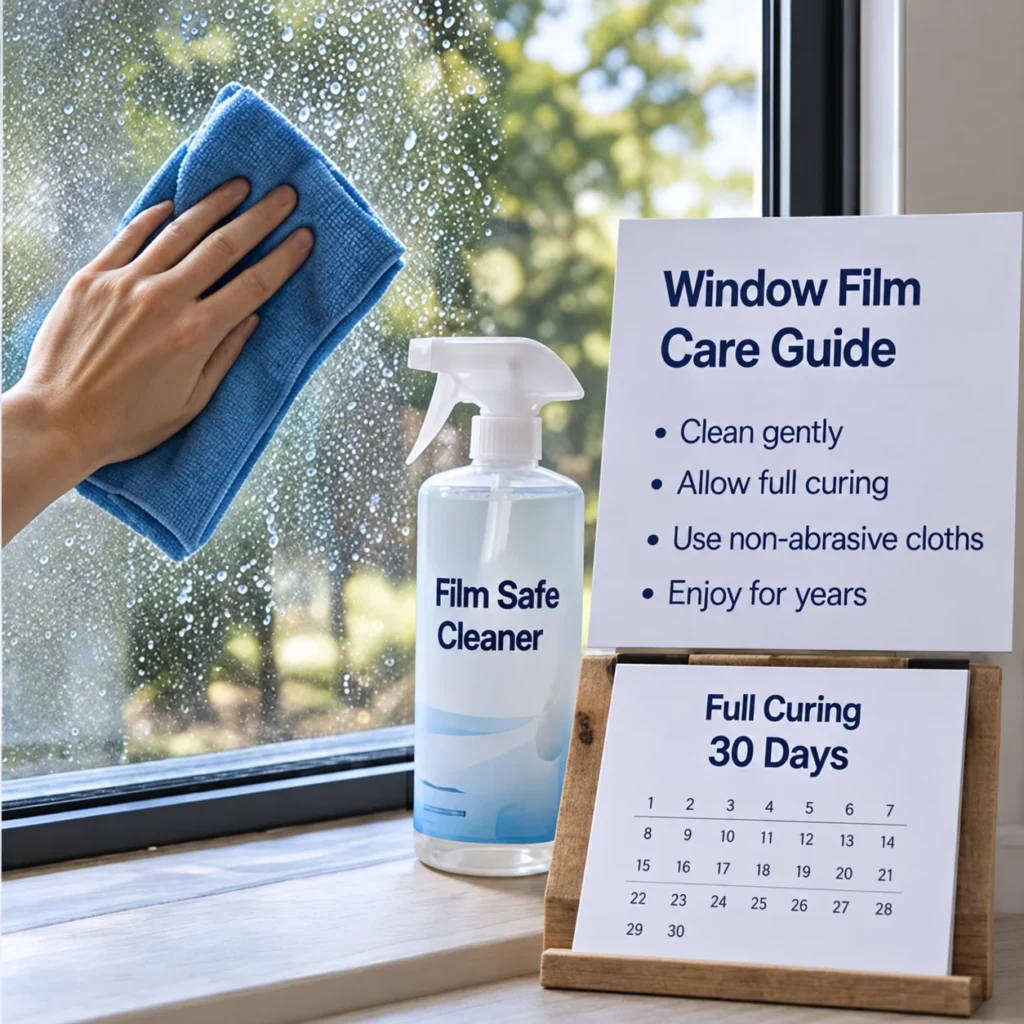
Window film can make a home more comfortable, private, and easier to manage in strong sunlight. However, even a quality film needs the right care. Using harsh cleaners, rubbing the edges, or cleaning the glass too soon can affect the appearance of the film and may shorten its useful life.
Good care does not require special equipment or a complicated routine. Whether you already have house tint film or are considering a new residential window film, a few simple habits can help keep the surface clean, smooth, and attractive for years.
This guide explains how curing works, how to clean window film safely, what can damage it, and when it may be time to ask a professional dealer to inspect the film.
Why Proper Window Film Care Matters
Window film becomes part of the glass surface, so it should not be treated exactly like bare glass. Sharp tools, rough cleaning materials, and strong chemicals can affect the film surface or its edges.
Proper care can help you:
- Keep the film clear and clean
- Reduce the risk of scratched surfaces
- Protect the film around corners and edges
- Avoid unnecessary peeling or lifting
- Maintain a neat appearance
- Keep residential windows easier to maintain
- Identify possible film issues before they become worse
This is especially important for tinted film for house windows in rooms that receive regular sunlight or need frequent cleaning.
A simple cleaning routine is usually enough. The main goal is to clean dirt and fingerprints without putting unnecessary pressure on the film.
What Happens While Window Film Is Curing?
Window film does not always reach its final appearance immediately after it is applied to the glass. A curing period allows moisture between the film and glass to gradually dry.
During this stage, the window may sometimes look slightly cloudy or hazy. Small moisture areas may also be visible. This does not always mean there is a fault with the film.
Curing speed can change depending on:
- Indoor and outdoor temperature
- Humidity
- Amount of sunlight reaching the glass
- Type of window
- Film construction
- Size and location of the glass
Warm and dry conditions may help moisture clear sooner, while cool or humid weather can make the process take longer.
Do not press, scratch, peel, or repeatedly touch areas that look different during curing. Your dealer can advise when the film is ready for normal cleaning.
What Should You Watch During the Curing Stage?
Some temporary changes can be part of normal curing. However, the film should still be handled carefully.
Contact your dealer if you notice:
- Film lifting from an edge
- Large areas that continue to separate from the glass
- Physical damage to the film surface
- Deep scratches
- Torn film
- Edges that continue to curl
- A visible issue that does not improve after the expected curing period
Avoid trying to repair these areas yourself. Pulling or cutting the film may turn a small issue into permanent damage.
How to Clean House Tint Film Safely
Cleaning house tint film is simple when the right materials are used. Gentle cleaning is usually better than heavy scrubbing.
Start with clean water and a mild cleaning solution that is suitable for window film. Use a clean microfiber cloth or another soft, non-abrasive cleaning material.
A good cleaning routine includes:
- Remove loose dust before wiping the surface
- Use a mild window film-safe cleaning solution
- Clean with a soft microfiber cloth
- Wipe gently instead of scrubbing
- Work from the upper area of the glass downward
- Use light pressure near the film edges
- Dry the surface with another clean, soft cloth
Do not allow dirt to build up for long periods. Regular light cleaning is easier on the film than aggressive cleaning after heavy dirt has collected.
Our products
Six film families, one for every kind of glass
For ceramic and other residential solar-control films, start with Architectural Solar Control. Every family has its own page with the full range.
- Clarity IR Max
- Nano Ceramic
- Climate IQ 50
- Skyline
- Harmony DR
- Soft Tone
- Eco Silver 20
- X-Clear 70
- X-Eco Silver 15
- X-Hybrid DR 15
- Safety 4 Clear
- Security 8 Clear
- Security 8 Silver
- Security 14 Clear
- X-Safety 7
- AG 6 Clear
- Frost
- White Out
- Black Out
- Poly Layers
- V6 Comfort BLK
- V10 Ceramic IR BLK
- V16 Ceramic IR MAX
- V6 Core
- V10 Reactive
- V16 Velocity
What Should You Avoid When Cleaning Tinted Windows?
A window may look strong, but the film surface can still be damaged by the wrong tools.
Avoid using:
- Razor blades
- Metal scrapers
- Scouring pads
- Hard brushes
- Abrasive sponges
- Rough cleaning cloths
- Strong chemical cleaners not approved for window film
- Sharp tools around the film edges
- Tape or adhesive products directly on the film
- Excessive pressure while wiping
A razor blade that may be used on untreated glass should not automatically be used on film. It can leave scratches or cut through the surface.
The safest approach is simple: use a soft cloth, gentle cleaning solution, and light pressure.
Can You Use Normal Glass Cleaner on Window Film?
Not every glass cleaner is suitable for window film. Some cleaners contain strong chemicals or abrasive ingredients that may not be recommended for a film surface.
Check the product label before use. If it does not clearly indicate that it is suitable for window film, a mild soap-and-water solution is often a safer cleaning approach.
When cleaning tinted film for house windows, the goal is not to use the strongest cleaner available. The goal is to remove dirt without damaging the film.
A gentle cleaning product can normally handle:
- Fingerprints
- Light dust
- Everyday marks
- Minor smudges
- General household dirt
For difficult marks, ask your dealer what cleaning method is suitable for the specific film on your glass.
Does Ceramic Window Tint Need Special Care?
People choosing ceramic window tint for homes often focus on heat control, appearance, and comfort. Care should also be considered because even advanced film technology still has a finished surface that needs to be treated properly.
The basic care approach remains simple.
Use soft cleaning materials, avoid sharp objects, protect the edges, and do not use an unknown chemical cleaner without checking whether it is safe for film.
If you are searching for ceramic window tint for house windows, ask about recommended cleaning and maintenance at the same time you discuss film selection.
That way, you know how to care for the product from the beginning instead of trying different cleaners later.
Standard Window Film vs Ceramic Film Care
Different films can have different constructions, but normal household care remains very similar.
| Care Area | Standard Residential Film | Ceramic Residential Film |
|---|---|---|
| Soft microfiber cloth | Recommended | Recommended |
| Mild cleaning solution | Recommended | Recommended |
| Sharp scrapers | Avoid | Avoid |
| Heavy edge pressure | Avoid | Avoid |
| Abrasive pads | Avoid | Avoid |
| Regular gentle cleaning | Recommended | Recommended |
| Dealer inspection for damage | Recommended | Recommended |
The biggest mistake is assuming a premium film cannot be damaged. Better film technology does not mean the surface should be cleaned aggressively.
How Long Does House Window Film Last?
There is no single lifespan that applies to every window film.
A quality residential film may remain useful for many years, but actual service life depends on the product, glass, environment, sun exposure, and how the film is maintained.
The condition of house tint film can be affected by several factors:
- Film type and construction
- Amount of direct sunlight
- Window orientation
- Indoor environment
- Glass type
- Local climate
- Cleaning methods
- Physical contact with the film
- Condition of the film edges
- Quality of the original application
This is why lifespan should not be judged only by age. The actual condition of the film matters.
A film that remains clear, properly bonded, and physically undamaged may continue to perform as intended. A film showing major peeling, damage, or visible deterioration should be inspected.
Keep reading
More window film guides for your home
What Can Shorten the Life of Window Film?
Many film issues come from repeated physical damage rather than normal cleaning.
Common causes include:
- Scraping dirt with a hard object
- Using abrasive cleaning pads
- Cutting near the film
- Pulling at corners
- Repeatedly rubbing the edges
- Using unsuitable chemical cleaners
- Applying stickers or tape to the surface
- Allowing furniture or objects to scrape against the glass
- Attempting DIY repairs to damaged areas
Children’s toys, furniture, decorative objects, and cleaning equipment can also accidentally come into contact with low windows.
A little extra care around the glass can prevent unnecessary surface damage.
Window Film Cleaning Methods Compared
Choosing the right cleaning method makes routine maintenance easier.
| Cleaning Method | Suitable for Film? | Reason |
|---|---|---|
| Soft microfiber cloth | Yes | Gentle on the film surface |
| Mild soap and water | Usually suitable | Simple option for regular cleaning |
| Film-safe glass cleaner | Yes | Designed or approved for film surfaces |
| Rough sponge | No | Can scratch or mark the surface |
| Razor blade | No | Can cut or scratch the film |
| Metal scraper | No | High risk of permanent damage |
| Hard scrubbing | No | Can damage the surface or edges |
Always check any cleaner before applying it across the full window.
How Often Should Window Film Be Cleaned?
There is no need to create a complicated cleaning schedule. Clean the film when dust, fingerprints, or marks begin to affect the appearance of the glass.
High-touch areas may need attention more often. Windows in quiet rooms may stay clean for longer.
Regular gentle cleaning is normally better than waiting for heavy dirt to build up and then using strong pressure to remove it.
For ceramic window tint for homes, the same principle applies. Keep the surface clean without treating routine maintenance as deep scrubbing.
How to Keep Window Film Looking Good Between Cleanings
Daily care can reduce the need for heavy cleaning later.
Try to:
- Keep sharp objects away from the glass
- Avoid placing rough furniture directly against filmed windows
- Remove light marks before they become difficult to clean
- Keep children from scratching the film with toys
- Avoid attaching decorations directly to the film
- Check the edges occasionally
- Use soft cleaning tools only
- Keep separate cloths for windows instead of using dirty household rags
These small habits can make window care easier without adding much work to your normal household routine.
When Should Window Film Be Inspected?
Not every mark means the film needs replacement. Sometimes the surface simply needs cleaning.
A professional inspection may be useful if you notice:
- Continuous edge lifting
- Peeling
- Severe scratching
- Film separating from the glass
- Major discoloration
- Damage caused by another object
- Areas that appear physically torn
- A visible change that normal cleaning does not remove
Do not peel back an affected section to check underneath it. A dealer can examine the condition and advise whether the film can remain in place or should be replaced.
Should Old Window Film Be Replaced?
Age alone does not always tell you whether window film needs replacement. The condition and performance of the film are more useful indicators.
Replacement may be worth considering when the existing film has visible damage, unwanted appearance changes, peeling edges, or no longer suits the needs of the room.
Your needs may also have changed. A room that once required basic glare control may now need stronger heat control, privacy, UV protection, or another type of residential film.
This is where comparing current options can help. Ceramic window tint for homes, solar-control films, privacy films, and other residential solutions are designed for different goals.
The right choice depends on the glass and what you want the room to achieve.
Protect Your Window Film From the Start
Good window film care is mostly about using gentle methods consistently.
Allow the film to cure properly, clean it with soft materials, avoid sharp tools, protect the edges, and ask a professional when you see damage that normal cleaning cannot correct.
If you are comparing house tint film, ceramic window tint for house windows, or other residential film options, choose the product according to the needs of your glass and room rather than selecting film by appearance alone.
ProLayers supplies residential window film solutions through its professional dealer network, so homeowners can choose a film suited to comfort, glare, privacy, UV protection, and other window needs.
FAQ
Frequently asked questions
Seven quick answers about cleaning and caring for window film.
Still have a question? Ask usCan I clean window film immediately after it is applied?
It is better to wait until the film has completed the recommended curing period before normal cleaning. Your dealer can tell you when the surface is ready. Cleaning too early may put unnecessary pressure on film that is still settling onto the glass.
Are small moisture areas normal after window film is applied?
Small temporary moisture or haze can appear during curing. Conditions such as temperature and humidity can affect how quickly the film reaches its finished appearance. If an area looks unusual or remains a concern, ask your dealer to inspect it instead of pressing or cutting the film.
Can I use a razor blade to remove a mark?
No. A razor or metal scraper can scratch or cut the film. Use a soft cleaning method first. If the mark cannot be removed safely, contact a professional rather than scraping the surface.
Is ceramic film harder to maintain?
No complicated routine is normally required. Ceramic window tint for homes should still be cleaned gently with suitable materials. The important points are protecting the surface, avoiding abrasive tools, and being careful around the edges.
Can window film be cleaned with paper towels?
A clean, soft microfiber cloth is generally a better choice because some paper products can be rough or may leave lint behind. Using a dedicated window-cleaning cloth also reduces the chance of transferring grit from other household cleaning jobs.
What should I do if the edge starts peeling?
Do not pull the loose section. Keep the area free from unnecessary contact and ask your dealer to inspect it. Pulling on the edge can increase the damaged area.
Does regular cleaning make window film last longer?
Good maintenance can help prevent avoidable surface damage and keep the film looking better. However, overall film life also depends on the film type, glass, environment, sun exposure, and other conditions.
Contact us
Film looking tired? Tell us about the windows.
Send us photos, how old the film is and what you are seeing, and we will point you to the right next step.
Contact us-
Visit
12551 Steepleway Blvd SWB B101
Houston, TX 77065 - Hours Mon to Fri 9am to 5pm