COMMERCIAL / Solar & Energy Control
Commercial Solar Tint for Hot Desks and Cold Corners
Commercial Solar Tint for Hot Desks and Cold Corners: control solar heat and glare at the glass and improve tenant comfort.
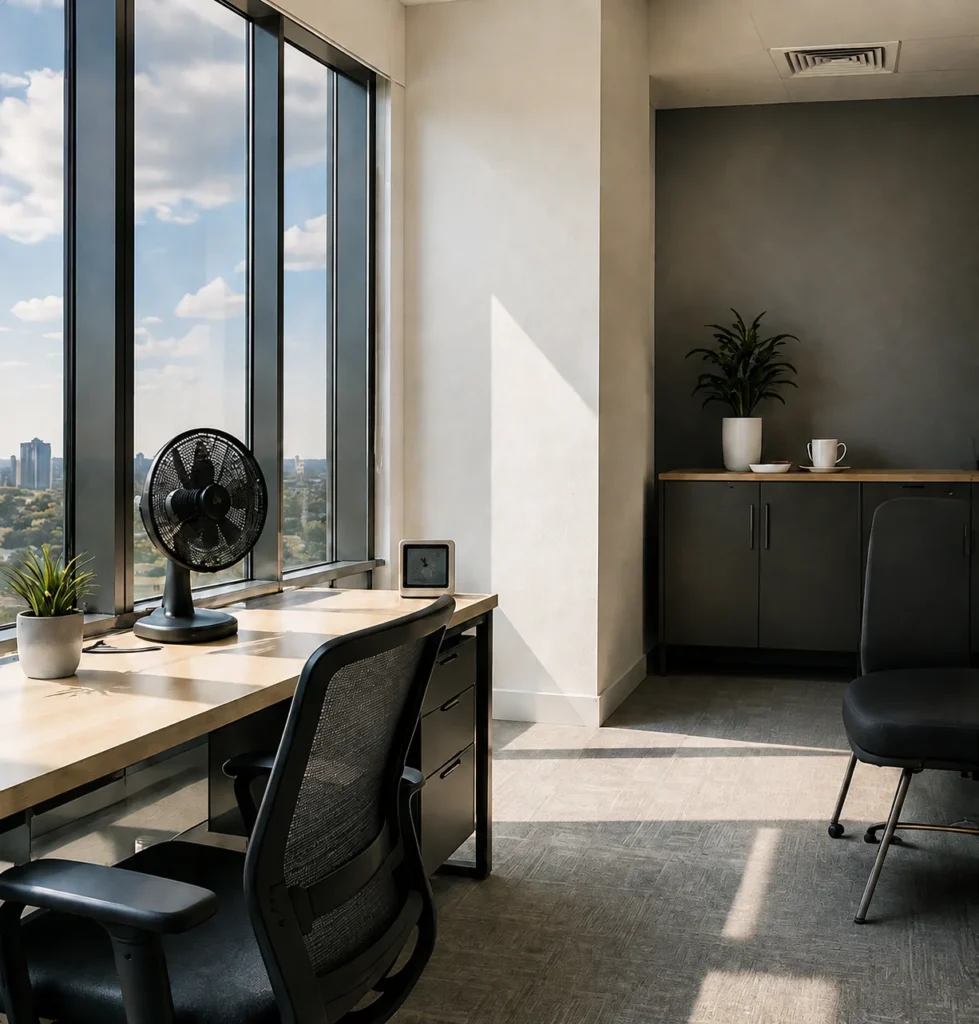
A desk beside a sunny window can feel hot while another workstation in the same office feels cold. Employees start moving chairs, closing blinds, changing thermostats, or asking facility teams to adjust the air conditioning. Yet the discomfort often returns when the sun reaches the glass again.
Large commercial windows bring valuable daylight and outdoor views, but they can also create uneven solar heat inside a building. Commercial solar window film helps manage that heat at the glass, reducing the impact of direct sunlight before it becomes another comfort complaint.
For property managers, facility teams, building owners, and tenants, this can mean a more balanced indoor environment without automatically replacing windows or covering every view with blinds.
When the thermostat looks normal but the desk beside the glass still feels uncomfortable, the window exposure may be part of the issue.
Why Do Some Office Desks Feel Hot While Others Feel Cold?
Most commercial spaces are not exposed to sunlight in the same way throughout the day. One side of a building may receive strong morning sun, while another gets intense afternoon exposure.
Desks close to large windows can therefore feel very different from workstations deeper inside the room. A single thermostat may be trying to control spaces that are receiving completely different amounts of solar heat.
This can lead to familiar complaints:
- Workstations beside windows becoming uncomfortable during sunny hours
- Employees lowering blinds and losing natural daylight
- People moving away from perimeter desks
- Screen glare making computer work uncomfortable
- Some occupants asking for more cooling while others feel too cold
- Meeting rooms becoming noticeably warmer during certain hours
- Facility teams repeatedly adjusting temperature settings
- HVAC systems working against solar heat entering through the glass
The thermostat may be doing its job. The real issue can be that sunlight is adding heat directly to specific areas of the building.
How Commercial Solar Window Film Helps Control Solar Heat?
Solar control film is applied to existing architectural glass to manage how solar energy passes through the window.
Instead of allowing the full effect of sunlight to reach desks, floors, furniture, and occupants, the film helps reduce unwanted solar heat entering the space. The right film can also reduce glare while keeping useful daylight and exterior views.
This makes commercial solar control window films especially useful in buildings where the glass is still in good condition but solar exposure is affecting indoor comfort.
Reduce Heat Around Perimeter Workstations
Perimeter offices and desks are usually the first areas to feel the effect of strong sunlight. Solar window film helps limit solar heat entering through exposed glass. This can make workstations near windows easier to use during periods of direct sun.
Rather than forcing occupants to choose between an outdoor view and comfortable working conditions, the right film can help create a better balance between both.
Control Screen Glare Without Closing the Office
Bright sunlight does not only create heat. It can also reflect from computer monitors, televisions, conference displays, polished furniture, and other surfaces. Employees may respond by closing blinds for much of the day. That solves one issue but creates another: a darker workspace with less daylight and limited outside views.
Properly selected commercial solar tint can reduce excessive glare while allowing the office to continue benefiting from natural light.
Support More Consistent Indoor Comfort
Window film does not control the HVAC system, but reducing solar heat at the glass can remove one source of temperature imbalance. This can be useful when perimeter areas become warm while interior areas remain comfortable or even feel cold.
A building with more controlled solar exposure can be easier to manage than one where direct sunlight is continuously adding heat to selected rooms.
What Is Causing the Tenant Complaint?
Different comfort complaints can have different causes. Window film is most useful when solar exposure is a major part of the issue.
| What Occupants Notice | Possible Cause | How Solar Film May Help |
|---|---|---|
| Desk becomes hot in the afternoon | Direct solar exposure | Helps reduce solar heat through the glass |
| Computer screen is difficult to see | Bright sunlight and reflection | Helps control uncomfortable glare |
| Blinds stay closed all day | Heat or excessive brightness | Can reduce dependence on closed blinds |
| Window-side offices feel warmer | Perimeter solar heat gain | Helps manage heat at exposed glazing |
| One side of the floor needs more cooling | Different façade orientation | Film can be selected for solar-exposed glass |
| Furniture or finishes receive strong sunlight | Continuous daylight exposure | Solar-control film can add another layer of protection |
Window film should not be treated as the answer to every comfort issue. Airflow problems, equipment failures, poor insulation, damaged seals, humidity, and HVAC balancing can also affect indoor conditions.
A good project starts by identifying what is actually causing the discomfort.
Commercial Solar Tint vs Blinds and Shades
Blinds can reduce brightness and give occupants control over privacy, but they work after solar energy has already reached the window system. They also depend on people using them consistently. In many offices, one employee opens the blind for daylight while another closes it because of heat or screen glare.
Solar film works directly on the glass, so occupants do not have to manage it throughout the day. That makes film useful for spaces where building managers want solar control without permanently hiding the view.
Blinds, shades, and film can also be used together. They solve different needs, and one does not automatically replace the other.
Our products
Six film families, one for every kind of glass
For sun-exposed commercial glass, start with Architectural Solar Control. Every family has its own page with the full range.
- Clarity IR Max
- Nano Ceramic
- Climate IQ 50
- Skyline
- Harmony DR
- Soft Tone
- Eco Silver 20
- X-Clear 70
- X-Eco Silver 15
- X-Hybrid DR 15
- Safety 4 Clear
- Security 8 Clear
- Security 8 Silver
- Security 14 Clear
- X-Safety 7
- AG 6 Clear
- Frost
- White Out
- Black Out
- Poly Layers
- V6 Comfort BLK
- V10 Ceramic IR BLK
- V16 Ceramic IR MAX
- V6 Core
- V10 Reactive
- V16 Velocity
Why Changing the Thermostat May Not Solve Hot Desks
Turning the temperature lower can feel like the simplest answer to a hot office. But if the discomfort is concentrated beside sun-facing windows, additional cooling may affect the entire HVAC zone rather than only the desks receiving direct solar heat.
People away from the windows can then become too cold while occupants beside the glass are still dealing with sunlight. Managing the solar load closer to its source can therefore be an important part of a broader comfort strategy.
Window film and HVAC systems should not be viewed as competing solutions. The goal is to reduce unnecessary solar heat while allowing the mechanical system to manage the conditioned space properly.
Where Commercial Solar Control Window Films Make Sense?
Commercial solar film can be considered anywhere large areas of glazing are creating heat, brightness, or comfort concerns.
Common applications include:
- Corporate offices
- Coworking spaces
- Conference rooms
- Retail storefronts
- Hotels and hospitality properties
- Healthcare facilities
- Schools and universities
- Multifamily common areas
- Government buildings
- Banks and financial branches
- Auto dealerships and showrooms
- Fitness centers
- Restaurants
- Senior living facilities
Buildings with east-, west-, or strongly sun-exposed façades often require particular attention because conditions can change significantly throughout the day. The correct solution still depends on the glass, orientation, building design, desired appearance, and performance goals.
Can You Keep Natural Light and Still Reduce Solar Heat?
Yes. Solar control does not automatically mean using very dark glass. Modern film options can provide different levels of visible light transmission, reflectivity, solar control, and exterior appearance. This allows a project team to select a film according to both performance and design goals.
Some buildings need stronger glare control. Others want the windows to remain visually neutral. That is why choosing a film only by how dark it looks is not a good approach.
A commercial project should consider:
- Existing glass type
- Window orientation
- Amount of direct sunlight
- Desired daylight level
- Exterior building appearance
- Interior reflectivity
- Screen glare
- Privacy requirements
- Existing window coatings
- Tenant comfort goals
- Building use
The best film is the one that fits the specific glazing and comfort conditions of the property.
Why Glass Orientation Matters
The same film does not always need to be used across every section of a commercial property. A façade receiving strong afternoon sunlight can behave differently from a shaded elevation. Meeting rooms, corner offices, reception areas, and open-plan workspaces can also have different comfort requirements.
This is why commercial solar film selection should begin with the building rather than a generic tint recommendation. A professional evaluation can help identify where solar exposure is strongest and which glazing areas should receive priority.
What Commercial Solar Window Film Can and Cannot Fix
Solar film can be an effective solution when direct sunlight is creating heat and glare through existing glass. It should not, however, be presented as a repair for every building-comfort issue.
Solar film can help with:
- Solar heat entering through windows
- Hot spots close to glazing
- Excessive brightness
- Screen glare
- Heavy dependence on blinds
- Maintaining useful daylight
- Improving comfort around exposed workstations
- Supporting a more consistent appearance across glazing
Other building systems should be checked when you have:
- Weak airflow
- HVAC equipment faults
- Damaged window seals
- Air leakage
- Excess humidity
- Poor insulation
- Incorrect thermostat placement
- Significant heating or cooling problems unrelated to sunlight
This distinction matters because the strongest commercial window film projects start with the correct diagnosis.
A Better Approach to Tenant Comfort Complaints
When tenants report hot desks or uncomfortable rooms, avoid treating every complaint as a thermostat issue. Start by checking when the discomfort happens, where the workstation is located, and whether direct sunlight reaches the glass during that period. If the complaint follows the sun, window performance deserves attention.
A simple evaluation can include:
- Identify the rooms receiving the most complaints.
- Record the time of day when discomfort becomes noticeable.
- Check the orientation of the affected glass.
- Look for direct sun and screen glare.
- Review whether blinds stay closed during working hours.
- Confirm that the HVAC system itself is operating correctly.
- Match the glazing with an appropriate solar-control film option.
This creates a clearer path than repeatedly changing temperature settings without addressing the source of the heat.
Keep reading
More commercial solar control guides
Why Window Film Can Be Practical for Existing Buildings
Replacing glazing can become a much larger building-envelope project. When existing windows remain serviceable and the main concern is solar heat or glare, film can offer another way to improve the performance of the existing glass.
It is also useful for occupied commercial spaces where owners want to retain the current windows, architectural character, daylight, or views. The key is proper product selection and compatibility with the existing glazing system.
ProLayers supplies commercial window film solutions through professional dealers. The installer can evaluate the project conditions and apply the selected film to the appropriate glass.
Turn Repeated Comfort Complaints Into a Planned Building Upgrade
If tenants keep reporting hot desks, afternoon glare, or rooms that become uncomfortable at the same time every day, continuing to adjust blinds and thermostats can become an ongoing management task.
A properly planned commercial solar tint project gives property teams a more direct way to address solar exposure at the windows.
Instead of responding to the same complaints floor by floor, a professional assessment can identify which glazing areas are creating the highest solar load and which commercial solar control window films are suitable for those conditions.
A Commercial Film Project Can Help You:
- Address recurring heat and glare complaints at their source
- Improve comfort around valuable window-side workspaces
- Keep more natural daylight without relying on closed blinds
- Reduce disruption compared with a full window replacement project
- Select film according to glass type, orientation, appearance, and building use
- Create a more consistent look across selected commercial glazing
- Plan installation around occupied offices and operational requirements
For building owners and property managers, the value is not simply adding tint to glass. It is choosing a window solution around the way the property actually performs throughout the day.
Have Hot Spots in Your Building? Start With the Glass
You do not need to guess which film your building needs. A professional installer can review the affected windows, identify solar-exposed areas, check the existing glazing, and recommend options based on your comfort and appearance goals.
Whether you are managing one office suite, several floors, a storefront, or a larger commercial property, the first step is understanding where sunlight is creating the biggest impact.
Request a Commercial Window Film Assessment
Discuss with a ProLayers professional dealer about your property and the issues you are seeing.
Share details such as:
- Which rooms or floors become uncomfortable
- When heat or glare is strongest
- Which side of the building receives direct sun
- Whether occupants frequently close blinds
- Whether screen glare is affecting workspaces
- The approximate amount of glass involved
- Any appearance or privacy requirements
These details help the installer narrow down suitable commercial solar window film options before installation is planned.
If solar heat is making good office space difficult to use, there is little value in continuing to manage the same complaint every sunny day.
Stop Letting the Sun Decide Which Desks Are Comfortable
Tenant comfort complaints can become difficult when one employee wants more cooling and the person a few desks away is already wearing a sweater. If those complaints move with the sun, the windows should be part of the conversation.
The right commercial solar window film can help control solar heat and glare while keeping the daylight and views that make commercial spaces more enjoyable to use. Instead of covering good glass or constantly reacting to complaints, building teams can address solar exposure closer to its source.
ProLayers supplies window film solutions for commercial properties through professional dealers who can evaluate the glass, building orientation, appearance goals, and comfort requirements before installation.
FAQ
Frequently asked questions
Quick answers about commercial solar tint, hot desks and tenant comfort.
Still have a question? Ask usCan commercial solar tint help with hot office desks?
Yes, when the heat is mainly caused by sunlight entering through the windows. Solar film helps reduce solar heat at the glazing, which can improve comfort around exposed desks and perimeter work areas. If the area remains uncomfortable when there is no direct sun, the HVAC system, airflow, insulation, or another building condition may also need attention.
Does commercial solar film make windows very dark?
Not necessarily. Film is available in different appearances and visible-light levels. A building can often improve solar control without choosing the darkest possible film. The correct option depends on glare, daylight, façade appearance, glass type, and the level of solar exposure.
Can commercial solar control window films reduce screen glare?
Yes. Solar films can reduce excessive visible light and glare coming through windows. This can make computer screens, conference displays, and other digital equipment easier to view in spaces affected by strong sunlight.
Is window film better than blinds?
They perform different jobs. Film manages sunlight at the glass continuously, while blinds provide adjustable shading and privacy. Many commercial spaces can use both when they need solar control as well as occupant-controlled shading.
Will window film solve cold areas too?
It depends on why the area feels cold. If one part of the HVAC zone is being overcooled because another area receives strong solar heat, reducing that solar imbalance may help create more consistent conditions. Film will not repair drafts, failed seals, insulation issues, or heating-system problems.
Can film be added to existing commercial glass?
Many existing commercial glazing systems can use window film, but compatibility should be checked first. Glass construction, coatings, pane configuration, condition, orientation, and the selected film all need to be considered before a product is specified.
Does every side of the building need the same film?
No. Different façades can have different solar exposures and comfort requirements. A project may benefit from evaluating each orientation rather than automatically treating every window in exactly the same way.
Can window film help reduce HVAC strain?
Reducing unwanted solar heat can lower one source of cooling demand inside a building. Actual HVAC performance and energy results depend on the property, climate, glazing, equipment, occupancy, controls, and selected film, so project-specific evaluation is important.
Contact us
Glass causing heat or glare? Tell us about the building.
Send us which side of the building gets the sun, the rooms affected and roughly how much glass is involved, and we will point you to the right next step.
Contact us-
Visit
12551 Steepleway Blvd SWB B101
Houston, TX 77065 - Hours Mon to Fri 9am to 5pm