RESIDENTIAL / UV & Fade Protection
Sun Protection Film for House Windows to Reduce Floor Fading
Hardwood floors fading near sunny windows? Sun protection film helps reduce UV, glare and solar exposure without hiding the view.
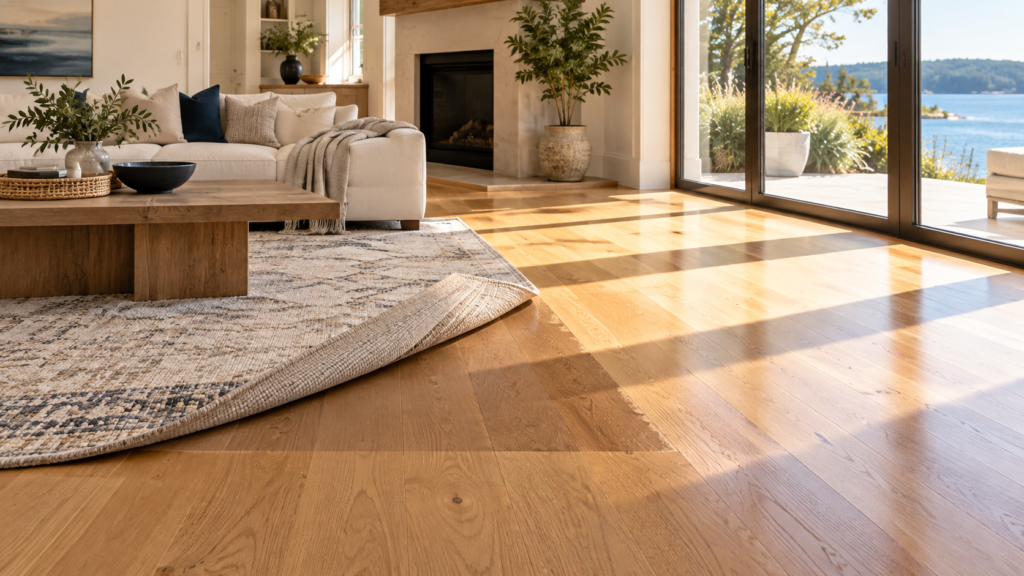
Why Hardwood Floors Fade Near Windows?
Floor fading is not caused by UV alone. Ultraviolet radiation is an important contributor, but visible light, solar heat, humidity, wood species, stain, finish and the material’s sensitivity can all influence how its color changes over time.
Large windows, patio doors and spaces receiving long periods of direct sunlight can create more noticeable exposure. Flooring closest to the glass may lighten, darken or shift tone while areas beneath rugs and furniture remain closer to their original color.
Window film cannot make hardwood completely immune to aging. Its purpose is to reduce the solar factors reaching the interior so visible change can be slowed.
How Sun Protection Window Film Helps
A quality sun film for home windows adds a thin performance layer to the glass. The right film can help manage UV, visible light, glare and solar heat without requiring you to cover the window throughout the day.
| What reaches the room | What you may notice | How window film helps |
|---|---|---|
| UV exposure | Gradual fading of floors, fabrics and artwork | Helps reduce UV passing through the glass |
| Strong visible light | Uneven exposure and bright floor areas | Helps manage excessive sunlight |
| Solar heat | Hot zones beside windows | Solar-control films can reduce heat through glazing |
| Glare | Harsh reflections on screens and surfaces | Selected films can soften uncomfortable brightness |
The goal is balance. A good residential film should support fade protection while preserving the daylight, view and appearance you want.
Keep the View Without Keeping the Blinds Closed
Blackout curtains and heavy shades can block sunlight, but they also block the outside view.
That may work in a bedroom, but it can be frustrating in a living room, sunroom, kitchen or open-plan space.
Residential window tint sun control works directly on the glass. You can still use curtains or blinds when you want privacy, while the film continues helping manage solar exposure whenever daylight reaches the window.
It can be especially useful for homes with:
- Hardwood or engineered wood near large windows
- Area rugs that leave obvious outlines when moved
- Furniture, upholstery or artwork exposed to daylight
- Sliding glass doors facing strong afternoon sun
- Rooms affected by both heat and fading
- TVs or computer screens affected by glare
Is Your Floor Already Showing Sun Damage?
Lift the corner of a rug, move a small table or compare the flooring beside the window with an area farther into the room. A visible color difference can be a sign that sunlight is affecting the finish.
Existing fading cannot be reversed by applying window film. A damaged floor may still need refinishing or another flooring treatment. Film is used to help reduce continued exposure going forward.
Some homeowners search for tint fade after noticing discoloration near a window. In many homes, however, the visible change is happening to the wood, rug, fabric or finish rather than to the window itself.
Choosing the Right Residential Film
Not every film looks or performs the same, and choosing the darkest option is not automatically the best answer.
The right product depends on the glass, room orientation and what you want the space to feel like afterward.
Want to Keep Plenty of Natural Light?
Ask about lighter or neutral film options designed to manage solar exposure without making the room unnecessarily dark.
Is the Room Also Too Hot?
If afternoon sun makes the room uncomfortable, a solar control window film may support both fade-control and comfort goals.
Do You Have Double-Pane or Low-E Glass?
Film compatibility depends on the glass construction and product selected. A qualified installer should identify the glazing before recommending a film.
Does Exterior Appearance Matter?
Some homeowners prefer a nearly neutral look, while others want a more reflective appearance. Film selection should consider both performance and how the windows look from inside and outside.
Window Film or Replacement Windows?
If the existing windows are in good condition and your main complaint is sunlight reaching the interior, replacing the entire window may not be necessary for that goal alone.
Residential window film works with existing glass and can be selected around fade control, glare, heat and appearance. Window replacement may still be appropriate when frames, seals or glazing need replacement for other reasons.
Protect More Than Hardwood Flooring
Hardwood is often where fading becomes obvious because a large floor area makes color differences easy to see.
The same sunlight can affect other items near the glass, including:
- Rugs and carpets
- Sofas and upholstered chairs
- Curtains and decorative fabrics
- Wood furniture and cabinetry
- Photographs, prints and artwork
- Interior finishes around large windows and doors
That is why sun protection film for house windows can be part of a broader plan to preserve the look of a room, not simply the floor.
Protect the Room Without Hiding It
You should not have to choose between enjoying natural light and watching your hardwood floors change faster beside the windows.
The right residential window film can help reduce the solar exposure reaching vulnerable surfaces while keeping the room open, bright and comfortable. Choose the film around your glass type, window direction, desired appearance and fade-control goals.
Frequently Asked Questions
No. Fading is influenced by several factors, including UV, visible light, heat, humidity and the material itself. Window film helps reduce solar exposure and can slow the conditions that contribute to visible fading.
Not necessarily. Residential films are available in different appearances and light-transmission levels. Film selection should reflect how much daylight you want to keep as well as your fade, heat and glare concerns.
Many window systems can use film, but the correct choice depends on the glass construction. Have the glazing identified before selecting a film.
No. It can also help reduce solar exposure affecting rugs, furniture, artwork, fabrics and other interior finishes.
Yes. Film, blinds and curtains can work together. Film manages solar exposure at the glass, while window coverings give you additional privacy and light control when needed.