RESIDENTIAL / ENERGY EFFICIENCY & COST
Window Film Comparison: Is Window Replacement Worth the Cost?
Hot rooms and glare but sound windows? Compare solar film for home windows with costly replacement before replacing good glass.
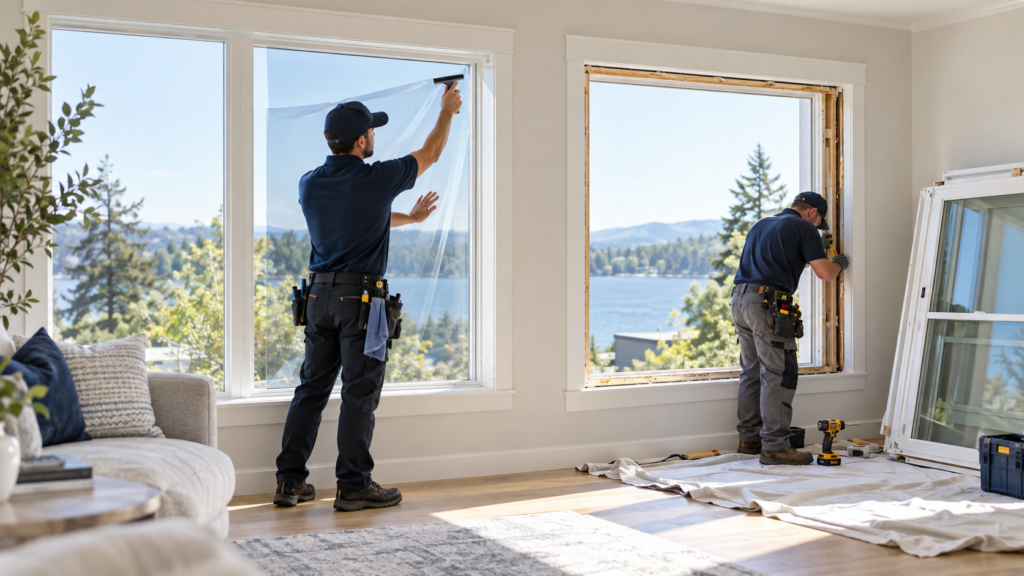
Window Film or Replacement Windows?
Choose window film when the windows are structurally sound but the room suffers from excessive solar heat, glare, fading, or unwanted daytime visibility.
Consider replacement windows when you are dealing with damaged frames, failed insulated-glass seals, serious drafts, water intrusion, or poor operation.
That difference matters. If the window itself is still performing properly, replacing the entire assembly may mean paying for work that does not directly address the reason the room feels uncomfortable.
Why Replacement Windows Can Become a Bigger Project
Replacing a window involves more than changing glass.
Depending on the home and window type, the work can include removal, disposal, a new frame or sash system, labor, sealing, trim work, paint touch-ups, and repairs around the opening.
That investment makes sense when the existing window is failing. But if the frame is sound and the main complaint is solar heat through the glass, replacing the full assembly may solve more than you needed to solve.
Window film upgrades existing glass rather than replacing the opening, which can mean less disruption and fewer finish repairs. For homeowners who want better indoor comfort without turning part of the house into a construction area, that difference can be important.
What Solar Window Film Can Address
The right solar film for home windows should be selected around how a room is used, which direction it faces, and what you want to improve. Common reasons homeowners consider residential window film include:
- West-facing rooms that become uncomfortable in the afternoon
- Glare across televisions, monitors, and workspaces
- Strong sun exposure on floors, rugs, furniture, and artwork
- Hot spots near large areas of glass
- A desire to keep natural light and the outdoor view
- Daytime privacy without permanently covering the window
Not every film performs the same way. Visible light, reflectivity, solar control, appearance, glass type, and exposure all matter. Choosing the darkest-looking film is therefore not the same as choosing the right film. A good residential window-film solution should balance solar heat control with the amount of daylight, visibility, and appearance you want to keep.
When Replacement Windows Make More Sense
Window film is an upgrade to glass performance. It is not a repair for a damaged window system.
Replacement should be evaluated when you have:
- Rotting, warped, or damaged frames
- Broken or difficult-to-operate hardware
- Moisture trapped between panes
- Failed insulated-glass seals
- Ongoing air or water leakage
- A broader need to improve whole-window insulation
In those situations, film would not correct the underlying condition.
This is why comparing the condition of the window before comparing products matters. If the assembly is failing, address the assembly. If the glass is sound and sunlight is creating the discomfort, a solar-control retrofit deserves consideration.
Window Film vs Replacement Windows
| Comparison Point | Window Film | Replacement Windows |
|---|---|---|
| Existing frame remains | Yes | Usually replaced or altered |
| Targets solar heat and glare | Yes | Depends on glazing selected |
| Can reduce UV exposure | Yes | Depends on glass or coatings |
| Repairs damaged frames | No | Yes |
| Fixes failed seals | No | Yes |
| Construction disruption | Lower | Higher |
| Finish repairs | Usually limited | May be required |
| Best for structural failure | No | Yes |
The useful question is not which option is universally better.
Compare Total Project Cost, Not Only the Quote
The initial quote tells only part of the story.
With replacement windows, consider removal, disposal, trim, caulking, painting, access, schedule disruption, and whether surrounding finishes may need attention.
With window film, the questions are different: Is the glass compatible? How much daylight do you want to keep? Is heat, glare, privacy, or fading the main concern? Which elevations receive the strongest sun?
You may not need to treat every window either.
If the discomfort is concentrated in a west-facing living room, home office, sunroom, or another heavily exposed area, a targeted window-film retrofit can focus the project where the solar exposure is actually occurring.
That can make more sense than treating every window as though it has the same issue.
Can Window Film Improve Energy Efficiency?
Solar control window film manages solar energy passing through glass. In cooling-dominated conditions, reducing unwanted solar heat gain can improve indoor comfort and reduce the cooling load created by direct sun.
Some films also have low-emissivity properties, but window film should not be treated as a universal substitute for a modern insulated window assembly. Climate, window orientation, glass construction, exterior shading, HVAC conditions, and the selected film all affect performance.
That is why broad energy-savings promises are less useful than evaluating the actual home, the existing glazing, and the source of the discomfort.
The goal should be the right glass upgrade, not the biggest project.
What If You Already Have Double-Pane or Low-E Windows?
Modern glass does not automatically eliminate solar heat, glare, or fading concerns.
A room can still receive strong sun exposure even when the windows are relatively new. Film selection becomes more technical with insulated or Low-E glazing because coatings, pane construction, orientation, and thermal conditions matter.
The correct process is to identify the existing glazing first, determine what needs to improve, and then select a compatible window film. This also helps homeowners avoid choosing a film solely because of its shade, reflective appearance, or marketing claims.
A Simple Decision Check Before Replacing Your Windows
Ask these questions:
- Are the frames physically damaged?
- Is there moisture between the panes?
- Is there noticeable air or water leakage?
- Is the main complaint heat from direct sunlight?
- Is screen glare making the room difficult to use?
- Do you want to keep your current windows and outdoor view?
- Are only certain rooms or elevations causing trouble?
If the first three describe your home, replacement deserves serious consideration.
Improve the Glass Without Replacing What Still Works
If your windows are still in good condition, full replacement may not be the first option you need to explore.
Start by identifying what is actually making the space uncomfortable: solar heat, glare, fading, privacy, drafts, seal failure, or structural deterioration.
ProLayers supplies professional window film solutions through its dealer network for projects where the existing glass can remain in place and its performance needs to be improved.
Compare the goal, window condition, disruption, and total project scope before making a major investment.
Frequently Asked Questions
Window film uses the existing glass, while replacement involves a new window assembly and more extensive labor. Actual installed cost depends on the property, glass type, selected product, access, and project scope.
No. Film can improve solar control, glare, UV management, or privacy, but it does not recreate every structural and insulating feature of a modern double-pane window.
If the windows are damaged, leaking, difficult to operate, or have failed seals, replacement may address the root issue. If they are structurally sound and the concern is sun-related heat or glare, solar film is worth evaluating before committing to replacement.
Not necessarily. Window films come with different visible-light and reflectivity characteristics. The right specification should balance solar control with the natural daylight and exterior view you want to preserve.