RESIDENTIAL / Safety & Security at Home
Can Safety and Security Film Stop a Break-In?
Can Safety and Security Film Stop a Break-In? See how it can delay entry and help hold shattered glass together after impact.
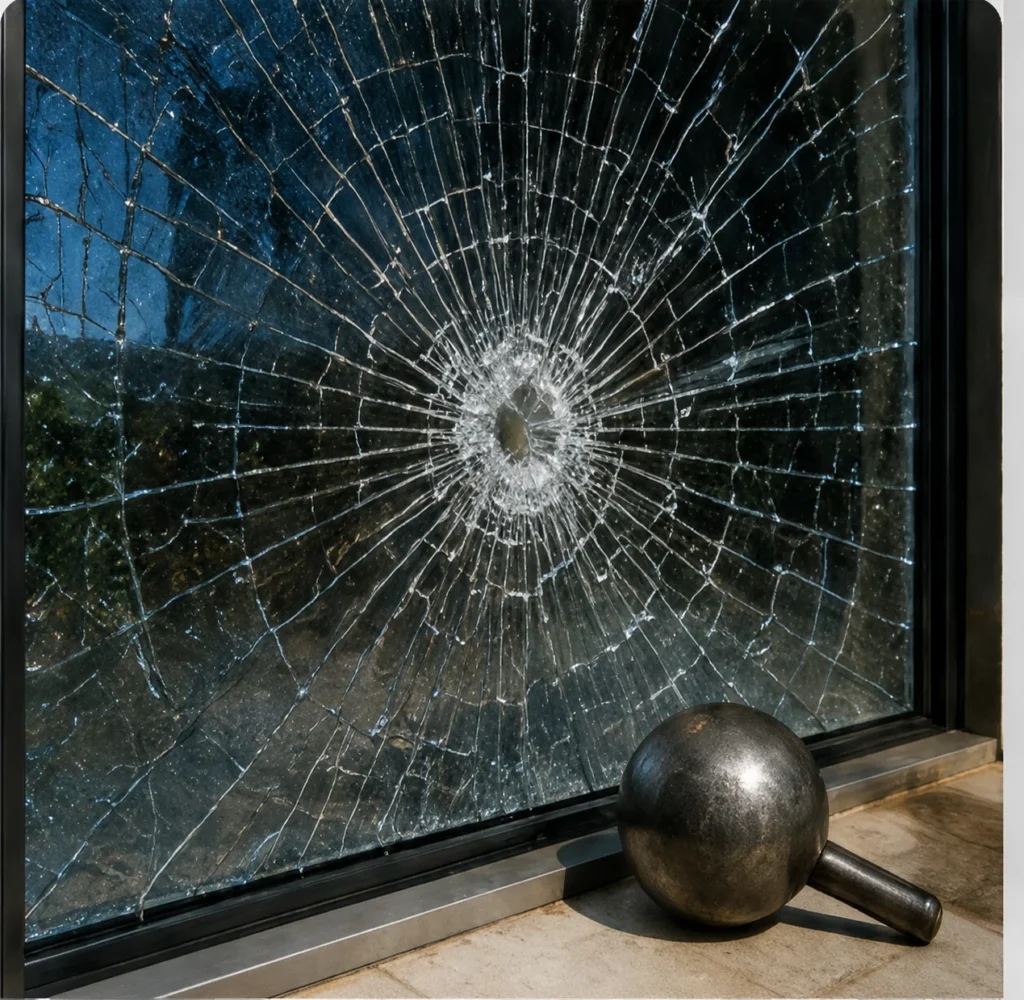
A locked door can feel secure until you realize how much glass sits beside it. Entry doors with sidelights, patio doors, ground-floor windows, storefront glazing, and other exposed glass can become vulnerable during an attempted break-in.
That is where safety and security film comes in. But it is important to understand what this type of window film actually does instead of expecting the glass to become impossible to break.
Does Security Window Film Actually Stop a Break-In?
The short answer is no—not in the sense of making a window completely impenetrable.
A properly designed security window film system can make forced entry more difficult by helping broken glass remain together rather than immediately separating into loose pieces. The goal is usually to create resistance and delay, not to promise that an intruder can never get through.
The International Window Film Association explains that properly specified, installed, and attached security window film can slow an intruder. Major film manufacturers also distinguish forced-entry delay from completely stopping an intruder.
That difference matters.
Security film is better understood as a glass-retention and forced-entry-delay upgrade—not an invisible wall.
For homeowners and businesses, those extra obstacles can make a vulnerable glazed opening harder to defeat while also improving the way broken glass behaves during an impact.
What Happens When Security Film Is Added to Glass?
Standard glass can crack or shatter when struck hard enough. Once enough of the glass falls away, an opening may become easier to reach or pass through.
Safety & security window film is bonded to the glass surface with a strong adhesive system. When the glass breaks, the film is intended to help keep fractured pieces together.
Instead of relying on the original glass alone, you now have a retrofit system designed around glass fragment retention.
Depending on the glazing and system selected, this can help:
- Hold broken glass fragments together after impact
- Reduce loose and flying shards
- Make rapid penetration through the opening more difficult
- Add resistance during smash-and-grab or forced-entry attempts
- Upgrade certain existing glass without immediately replacing the entire glazing system
- Preserve a relatively clear appearance where visible security barriers are not desired
Security film does not prevent the glass itself from cracking. Its value begins when the glass is subjected to impact and the film helps manage what happens afterward.
Our products
Six film families, one for every kind of glass
For glass retention and forced-entry delay, start with Safety and Security. Every family has its own page with the full range.
- Clarity IR Max
- Nano Ceramic
- Climate IQ 50
- Skyline
- Harmony DR
- Soft Tone
- Eco Silver 20
- X-Clear 70
- X-Eco Silver 15
- X-Hybrid DR 15
- Safety 4 Clear
- Security 8 Clear
- Security 8 Silver
- Security 14 Clear
- X-Safety 7
- AG 6 Clear
- Frost
- White Out
- Black Out
- Poly Layers
- V6 Comfort BLK
- V10 Ceramic IR BLK
- V16 Ceramic IR MAX
- V6 Core
- V10 Reactive
- V16 Velocity
Film Alone vs. a Film and Attachment System
One of the most important details is often overlooked: the glass, film, frame, and attachment method work as a system.
Security film may keep shattered glass together, but a filmed pane can still separate from its frame under enough force. A perimeter attachment system is designed to connect the filmed glass more securely to the surrounding frame.
Industry guidance specifically notes the importance of appropriate attachment systems when security film is being specified for delayed-entry applications.
| Glazing Setup | What Happens After Impact | Security Role |
|---|---|---|
| Existing glass only | Glass may crack, fragment, or leave the opening | Original glazing protection only |
| Security film on glass | Film helps retain broken pieces | Adds glass retention and penetration resistance |
| Film with suitable attachment | Filmed glass is also connected more securely to the frame | Creates a more complete forced-entry-delay system |
The correct configuration depends on the existing glass, frame construction, location of the opening, intended threat, and compatibility of the selected products.
This is why choosing security film based only on thickness or a dramatic impact video can be misleading.
Where Does Security Film Make the Most Sense?
Security window film is particularly useful where large areas of accessible glass create an obvious weak point.
Entry Doors and Sidelights
A strong lock offers limited value if nearby glass can be broken to reach the interior side of the door. Applying a properly selected security film system to accessible entry glazing can add another obstacle between the outside and the locking hardware.
Sliding Glass and Patio Doors
Large glass doors provide visibility and natural light, but they also create a wide glazed opening. Safety film can help keep broken pieces bonded together after impact rather than allowing the glass to immediately fall apart.
Ground-Floor Windows
Windows hidden from the street, located around the side of a house, or positioned close to landscaping can deserve additional attention when planning layered home security.
Retail and Commercial Glass
Large storefronts and glazed entrance systems can expose merchandise and interior spaces directly to the exterior.
For those applications, commercial security film can form part of a broader security strategy involving glazing, frames, locks, alarms, cameras, lighting, access control, and other physical-security measures.
Security films should complement these measures rather than replace them.
Keep reading
More window film guides for your home
Is Security Film the Same as Burglar-Proof Glass?
Security film is specifically designed to improve the performance of existing glazing under certain impact conditions. It does not convert ordinary glass into an indestructible transparent wall.
The IWFA has also cautioned against representing conventional safety and security window film on standard glazing as bullet-resistant. For homeowners, facility managers, architects, and business owners, the better question is:
What level of delay and glass retention does this particular glazing system need?
That leads to a much more useful product specification than simply asking for the “strongest film.”
What Should You Consider Before Choosing a Security Film?
The existing window should be evaluated as a complete assembly rather than treating the film as an isolated product.
Important considerations include:
- Existing glass type
- Window or door frame construction
- Condition of the glazing
- Location and accessibility of the glass
- Residential or commercial application
- Desired forced-entry resistance
- Whether perimeter attachment is appropriate
- Visibility and appearance requirements
- Compatibility with the existing glazing system
A storefront exposed to smash-and-grab risk may require a different approach than an interior glass partition or residential patio door. The right specification should match the actual application.
What About Security Film for Vehicle Windows?
People searching for security film for car windows are often trying to reduce the vulnerability created by side glass during theft or smash-and-grab incidents.
Automotive glazing, however, is different from architectural glazing. Vehicle glass construction, movement, window mechanisms, visibility requirements, and applicable regulations all need to be considered.
For that reason, car window security film should be treated as a vehicle-specific application rather than simply applying an architectural security-film specification to an automobile.
If your goal is vehicle glass protection, choose products specifically intended for automotive use and check applicable local window-film regulations.
Is Security Film Worth Considering for a Home or Business?
It can be a practical option when the goal is to strengthen an existing glazed opening without turning the property into something that looks heavily fortified. Clear security films can preserve the appearance of the existing glass while adding another layer to a broader security plan.
The key is having realistic expectations. Security film is not there to promise that glass will never break. It is there to help the broken glazing remain more difficult to penetrate and better contained after impact. For many properties, that is exactly the improvement the vulnerable glass needs.
Add Security Without Giving Up Your Existing Glass
If exposed doors, sidelights, patio glass, storefronts, or accessible windows are making your property feel easier to breach than it should, replacing every window is not the only approach worth evaluating.
A properly selected safety and security film system can improve glass retention and add another layer of resistance while maintaining the appearance of the existing glazing.
ProLayers supplies professional window film solutions through its dealer network rather than installing directly. The right film and attachment approach should be matched to your existing glass and the level of protection your property requires.
FAQ
Frequently asked questions
Six quick answers about security film and break-ins.
Still have a question? Ask usCan a burglar still break glass with security film?
Yes. Security film does not guarantee that glass will remain unbroken. It is designed to help hold fractured glass together and can make penetration more difficult after the glass has been struck.
Will security film stop someone from entering?
It should not be sold with a guarantee that it will completely stop an intruder. A properly specified system can delay forced entry, particularly when the film, glazing, frame, and suitable attachment method work together.
Is thicker security film always better?
Not necessarily. Film construction is only one part of the glazing system. Existing glass, adhesive, frame condition, attachment method, installation, and the intended threat should also influence product selection.
Can safety film be used on sliding glass doors?
Security and safety films can be used for many glass-door applications when the selected product is compatible with the existing glazing. The glass and framing should be evaluated before the system is specified.
Does security film make windows bulletproof?
No. Conventional security film applied to standard existing glazing should not be represented as bulletproof or bullet-resistant.
Is security film only useful for break-ins?
No. Depending on the product and system design, safety films may also be used to help retain broken glass caused by accidental impact, spontaneous breakage, severe weather, seismic movement, or other hazards. The correct film should always be selected for its intended application.
Contact us
Worried about exposed glass? Tell us about the door or window.
Send us the glass size, where it is and what worries you most, and we will point you to the right next step.
Contact us-
Visit
12551 Steepleway Blvd SWB B101
Houston, TX 77065 - Hours Mon to Fri 9am to 5pm