COMMERCIAL / Privacy, Branding & Decorative
Office Window Tint for Conference Rooms & Private Offices
Office Window Tint for Conference Rooms & Private Offices: add privacy, cut screen glare and keep glass partitions bright.
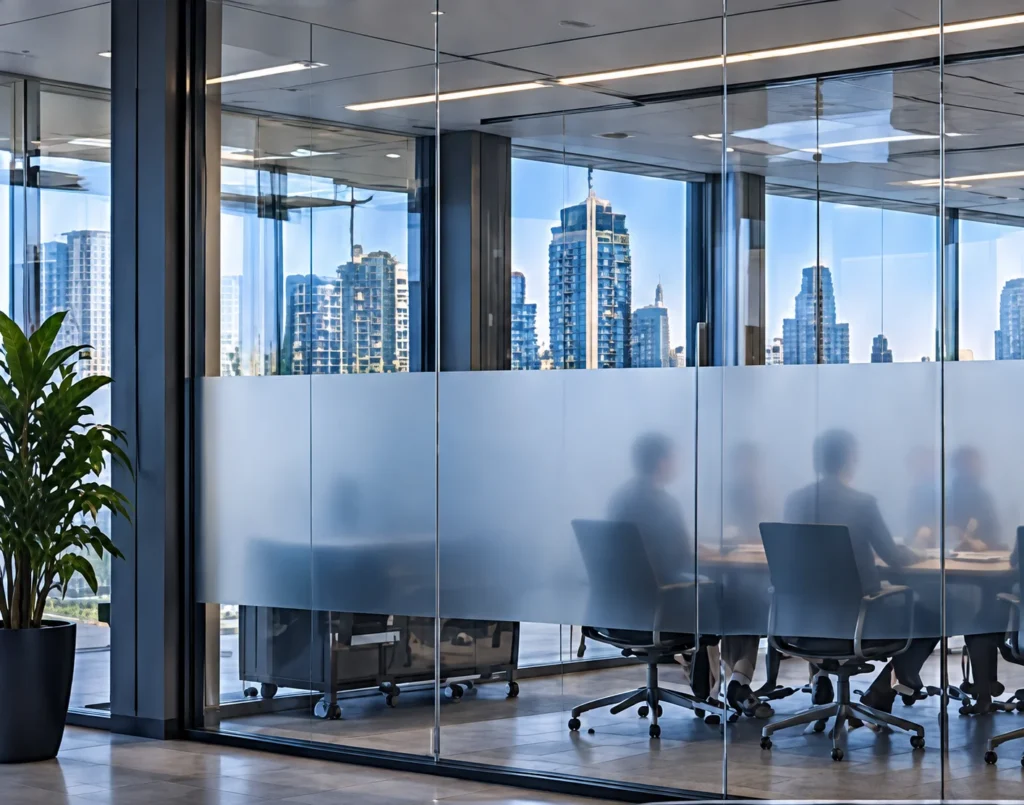
Clear glass makes modern offices feel open, bright, and professional. But when conference rooms and private offices are fully visible, important meetings can feel exposed, employees may become distracted, and computer screens can be harder to use when sunlight or bright reflections hit the glass.
The right office window tint can make glass spaces more practical without removing the modern look that made you choose glass in the first place. Privacy, glare control, branding, and visual comfort can all be planned around how each room is actually used.
Make Conference Room Glass Feel Private Without Closing the Space
Conference rooms are often used for client discussions, interviews, presentations, team planning, HR meetings, and other conversations that should not feel like they are taking place in a glass box. Clear glass can allow everyone walking through the hallway to see directly into the room.
Privacy film changes that balance. Frosted, decorative, patterned, or gradient film can reduce direct visibility while allowing the office to keep a bright and open appearance.
A well-planned office window tint film can help with:
- Visual privacy for meetings and conversations
- Reduced distractions from busy hallways
- Privacy around screens, documents, and whiteboards
- A cleaner appearance than temporary blinds or coverings
- Defined meeting and working zones inside open offices
- Decorative glass that fits the interior design
- Consistent styling across offices, doors, and partitions
Privacy does not always mean covering every inch of glass. In many offices, the better choice is to place privacy film only where people can directly see through the glass.
Privacy Film for Private Offices
A private office should actually feel private. When an office has a full-height glass wall or glass door facing a hallway, employees, managers, and clients may feel exposed even when the door is closed.
Choosing the right window tint for office partitions can reduce this direct line of sight while keeping the room connected to the rest of the workplace. Frosted bands, full frosted coverage, gradient designs, or decorative patterns can be selected according to the level of privacy needed.
Executive offices may need more visual separation. Smaller offices may benefit from partial coverage that creates privacy around desk level while keeping the upper part of the glass clear.
The goal is not simply to hide the room. The goal is to create the right balance between privacy, daylight, visibility, and office design.
Frosted, Gradient, or Decorative Glass Film?
Not every office needs the same type of film. The correct choice depends on how the space is used, where people sit, what can be seen through the glass, and how much visibility you want to keep.
Frosted Glass Film
Frosted film gives clear glass a soft, etched appearance. It is a practical option for conference rooms, private offices, HR rooms, internal doors, and other spaces where visual privacy is important.
It can cover the full glass panel or only selected areas. This gives businesses more control over how open or private each room feels.
Gradient Privacy Film
Gradient film can create stronger privacy in one part of the glass while keeping another part more open. It works well when an office wants privacy around seated eye level without making the entire glass wall feel closed.
This style can also create a more architectural finish across conference rooms and office partitions.
Decorative Glass Film
Decorative films for glass can combine privacy with design. Patterns, lines, bands, frosted effects, and other finishes can turn plain office glass into a visual part of the interior.
Decorative film can work particularly well in reception areas, meeting rooms, corridors, coworking spaces, glass doors, and client-facing areas where appearance matters as much as privacy.
Office Glass Film Options Compared
| Film Option | Best For | Privacy Level | Keeps an Open Feel | Design Flexibility |
|---|---|---|---|---|
| Frosted Film | Conference rooms and private offices | High | Yes | High |
| Frosted Privacy Band | Meeting rooms and glass partitions | Targeted | Very High | High |
| Gradient Film | Modern conference rooms | Targeted to High | Very High | High |
| Decorative Film | Offices, reception areas, and partitions | Varies | Yes | Very High |
| Solar/Glare Control Film | Exterior office windows | Depends on film and lighting | High | Moderate |
The best option depends on the glass location and the result you want. Interior conference-room privacy and exterior solar control are different needs, so one film should not automatically be selected for every piece of office glass.
Our products
Six film families, one for every kind of glass
For office privacy and decorative glass, start with Decorative and Privacy. Every family has its own page with the full range.
- Clarity IR Max
- Nano Ceramic
- Climate IQ 50
- Skyline
- Harmony DR
- Soft Tone
- Eco Silver 20
- X-Clear 70
- X-Eco Silver 15
- X-Hybrid DR 15
- Safety 4 Clear
- Security 8 Clear
- Security 8 Silver
- Security 14 Clear
- X-Safety 7
- AG 6 Clear
- Frost
- White Out
- Black Out
- Poly Layers
- V6 Comfort BLK
- V10 Ceramic IR BLK
- V16 Ceramic IR MAX
- V6 Core
- V10 Reactive
- V16 Velocity
Reduce Screen Glare in Offices and Meeting Rooms
Privacy is not the only reason businesses consider window tinting for office spaces. Large exterior windows can bring strong sunlight into work areas, creating reflections on laptops, desktop monitors, presentation screens, and conference-room displays.
Employees may respond by closing blinds, changing seats, increasing screen brightness, or avoiding certain desks during brighter parts of the day. A suitable glare-control window film can reduce uncomfortable light without forcing the office to remain dark.
This can be useful in:
- Conference rooms with presentation displays
- Private offices with windows behind monitors
- Open-plan workspaces
- Reception desks
- Training rooms
- Video meeting spaces
- West- or sun-facing office areas
Film selection should be based on the glass, orientation, available daylight, privacy requirements, and the appearance the business wants to maintain.
Better Backgrounds for Video Meetings
Glass offices can create another common issue during video calls. Bright windows behind a person can make the camera image look poorly balanced, while reflections from nearby glass may create visual distractions.
Glare-control film can help manage strong incoming light in suitable spaces. Decorative or frosted interior film can also create a cleaner background when conference rooms or private offices face busy corridors.
For businesses that regularly hold client calls, remote meetings, presentations, interviews, or webinars, planning the glass around camera positions can make the room more practical for daily work.
Create Privacy Without Making the Office Feel Boxed In
One reason glass offices remain popular is their open appearance. Replacing clear partitions with solid walls may provide privacy, but it also changes how light moves through the workspace.
Glass film offers more control. Instead of choosing only between completely clear glass and a solid wall, businesses can decide exactly where privacy is required.
For example, a conference room may use a frosted band through the center of the glass while leaving the upper section clear. A private office may require wider coverage, while a reception partition may use a decorative pattern that provides only light visual separation.
This flexibility allows different areas of the same office to serve different purposes without losing a consistent design.
Use Office Glass as Part of Your Brand
Glass partitions do not have to remain plain. Decorative designs can turn conference rooms, internal doors, and reception glass into part of the overall workplace identity.
A business may choose simple geometric patterns, clean privacy bands, subtle decorative finishes, or custom visual elements that complement its branding. The design can remain understated or become a stronger visual feature depending on the space.
This approach works well for:
- Corporate offices
- Professional service firms
- Healthcare offices
- Financial offices
- Coworking spaces
- Technology companies
- Showrooms
- Training facilities
- Reception and waiting areas
A consistent glass treatment can make different rooms feel connected while still giving each space the level of privacy it needs.
Keep reading
More commercial privacy and decorative guides
Office Window Tint vs Blinds for Glass Offices
Blinds can block visibility, but they are not always ideal for internal glass partitions. They can make modern conference rooms feel heavier, require opening and closing, and may block more light than needed.
Office window tint and decorative privacy film become part of the glass itself. There are no hanging materials covering the partition, and privacy can be placed only where it is required.
Film can be especially useful when the goal is a clean, permanent-looking finish rather than a privacy solution that employees need to adjust throughout the day.
For exterior office windows, blinds and window film can also serve different purposes. Film can manage sunlight at the glass, while blinds may still be used when complete adjustable privacy is required.
How to Choose the Right Office Glass Film
Avoid choosing a film only because its sample looks good. The right film should match what the glass needs to do every day.
Before selecting a film, consider:
- Is the glass interior or exterior?
- Do you need full privacy or only eye-level privacy?
- Are computer screens visible from the hallway?
- Is sunlight causing glare on monitors?
- Do you want to keep natural light moving between rooms?
- Should the glass match existing office branding?
- Do doors and partitions need the same visual design?
- Is daytime exterior privacy also required?
- What type of glass is already installed?
Answering these questions makes it easier to narrow down the right privacy, decorative, or glare-control solution.
Office Window Film for More Than Conference Rooms
A good office film plan can cover several types of glass rather than treating each area separately. This helps create a more consistent appearance throughout the workplace.
Office window tint film can be considered for private offices, conference rooms, meeting pods, training areas, reception glass, internal partitions, glass doors, exterior windows, and other commercial glass surfaces.
Different films may be used within the same building. An exterior window may need solar and glare control, while an internal meeting room may need frosted privacy and a reception partition may need a decorative finish.
Matching the film to the purpose of each area produces a more practical result than using one solution everywhere.
Why Businesses Choose ProLayers for Office Glass Film
ProLayers supplies professional window film solutions designed for residential, commercial, automotive, decorative, safety, and specialty glass applications. For commercial spaces, film selection can be planned around privacy, glare, appearance, glass location, and the way each room is used.
Instead of making clear office glass less attractive, the right film can help businesses keep the modern appearance while making meeting rooms and private areas more comfortable and functional.
ProLayers works through a dealer network, so businesses can connect with an installer for product selection and project requirements.
Make Your Office Glass Work Better
Clear glass should not force your team to choose between a modern office and practical privacy. The right office window tint can help reduce exposed meeting spaces, control distracting glare, improve visual separation, and give glass walls a more finished appearance.
Whether you need privacy for a single conference room or a coordinated film plan across multiple private offices and partitions, start by identifying where visibility, glare, or design is getting in the way.
FAQ
Frequently asked questions
Quick answers about office window tint for conference rooms and private offices.
Still have a question? Ask usWhat is the best window film for conference room privacy?
Frosted film is one of the most practical choices when strong visual privacy is required. Gradient or partial frosted bands can be better when you want privacy at eye level while keeping part of the glass clear.
Can office window tint provide privacy without blocking all natural light?
Yes. Frosted, translucent, gradient, and decorative films can reduce visibility through glass while still allowing light to pass through the space. The exact result depends on the film selected.
Can window film help with office computer glare?
Suitable solar and glare-control window films can reduce strong visible light entering through exterior glass. Film selection should match the window orientation, glass type, and amount of glare in the workspace.
Is privacy film suitable for private office glass doors?
Yes. Glass doors can use full frost, privacy bands, gradients, or decorative designs depending on how much visibility the office wants to keep.
Can decorative window film be used for office branding?
Yes. Decorative glass film can support patterns, visual bands, and custom design elements that fit the appearance of an office or brand.
Is office privacy film the same as solar window tint?
Not always. Privacy or decorative film is often selected mainly to control visibility through interior glass, while solar window film is designed for exterior-facing glass where heat, sunlight, or glare needs to be managed.
Does reflective office tint provide privacy at night?
Reflective film should not be treated as guaranteed nighttime privacy. Its privacy effect depends on the lighting conditions on each side of the glass, so spaces needing consistent visual privacy should consider frosted, decorative, or other dedicated privacy options.
Should every office window use the same film?
No. A conference room, exterior office window, reception partition, and private office may have different requirements. Selecting film by location and purpose usually creates a better overall result.
Contact us
Glass too exposed or too plain? Tell us about the space.
Send us which rooms or doors need privacy, how much of the glass you want covered and any branding you have in mind, and we will point you to the right next step.
Contact us-
Visit
12551 Steepleway Blvd SWB B101
Houston, TX 77065 - Hours Mon to Fri 9am to 5pm