COMMERCIAL / Glare & Daylight Control
Commercial Window Tint for Hot Atriums & Overhead Glass
Commercial Window Tint for Hot Atriums & Overhead Glass: control heat, glare and UV while keeping lobbies open and bright.
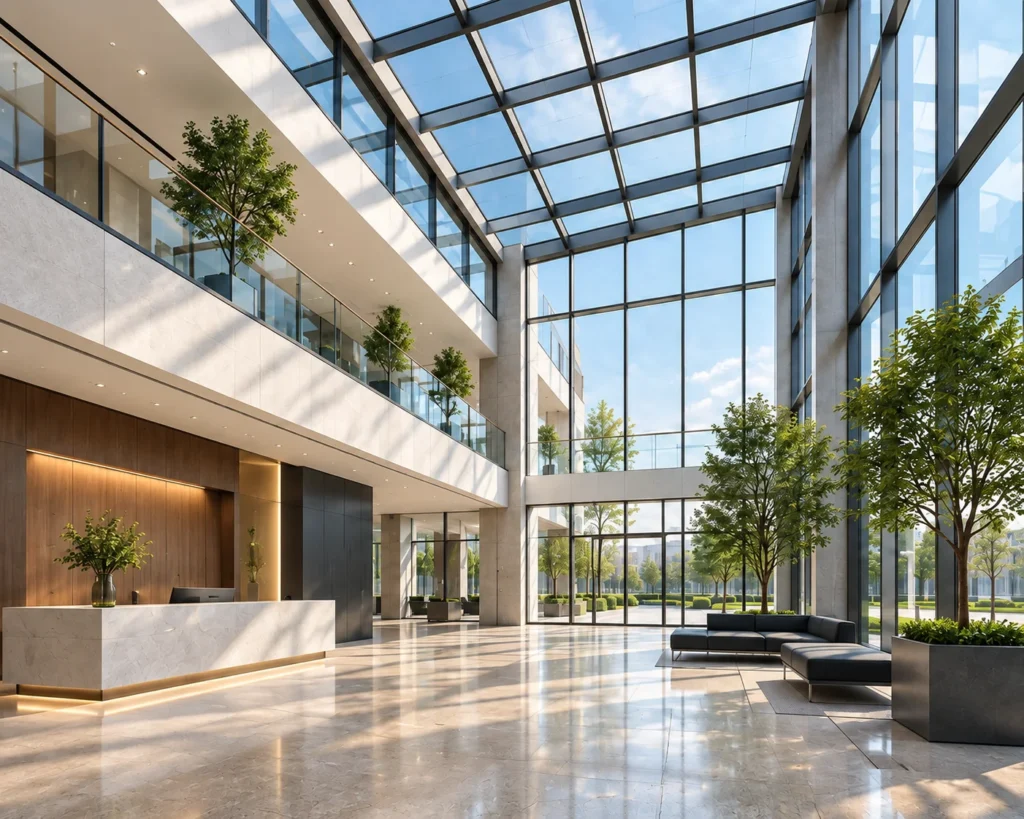
Atriums, entrance lobbies, glass roofs, and overhead glazing can make a commercial building look open, modern, and welcoming. But large areas of glass can also bring unwanted solar heat, harsh glare, and constant sunlight into spaces where employees, visitors, guests, or customers spend time.
ProLayers supplies window film for businesses that need better control over large commercial glass areas without covering the glass or taking away the architectural character of the building. The right film can help manage sunlight while keeping the space bright, professional, and comfortable.
Why Atriums and Overhead Glass Can Become Uncomfortable
Atriums and lobbies are often designed around natural light. Large glass walls, skylights, sloped glass, and roof glazing allow daylight to reach deep into the building.
The same glass can also create difficult conditions during sunny parts of the day.
Common concerns include:
- Excess solar heat under skylights or glass roofs
- Bright glare across reception desks and waiting areas
- Reflections on digital displays and computer screens
- Uneven temperatures between glass areas and interior zones
- Strong sunlight reaching flooring, furniture, displays, and finishes
- Uncomfortable seating areas near large glass sections
- Difficulty balancing daylight with indoor comfort
- High solar exposure across tall or hard-to-reach glazing
A suitable commercial window tint can help control these issues while allowing the glass to remain an important part of the building design.
Window Film for Atriums, Lobbies and High-Level Glass
Commercial window film adds a performance layer to existing glazing. Different films are designed for different priorities, including solar control, glare reduction, UV protection, appearance, and privacy.
This makes commercial window tint film useful for properties where replacing existing glass may not be the preferred approach.
It can be considered for:
- Office building atriums
- Corporate headquarters
- Hotel entrance lobbies
- Shopping centers and retail spaces
- Airports and transport facilities
- Healthcare buildings
- Schools and universities
- Public buildings
- Restaurants and hospitality spaces
- Showrooms
- Skylights and roof glazing
- Sloped architectural glass
- Large reception areas
- Multi-story common spaces
The correct film should always be selected according to the existing glass, building design, solar exposure, access, and required visual appearance.
Control Solar Heat Without Closing Off the Space
One of the main reasons businesses consider commercial tint for atriums is heat.
Direct sunlight entering through a large amount of glass can create warmer zones below or around the glazing. A lobby may feel comfortable in the morning but become much warmer when direct sun reaches the glass later in the day.
Solar control film is designed to manage part of the solar energy passing through the glazing. This can help create a more balanced indoor environment without adding blinds, curtains, or other features that may interrupt the open appearance of an atrium.
For commercial properties, this is particularly useful in areas where maintaining natural light and architectural visibility is important.
Reduce Harsh Glare in Lobbies and Shared Spaces
A bright lobby does not always mean a comfortable lobby.
Strong sunlight can reflect from polished flooring, glass walls, metal surfaces, reception counters, and digital screens. Employees may struggle to see monitors, while visitors may avoid seating areas that receive intense sunlight.
A properly selected commercial tint film can reduce excessive visible light and help soften glare.
This can make the space easier to use while still allowing daylight through the glass. Film selection can also be adjusted depending on whether the goal is light glare control or stronger solar management.
Help Protect Interiors From UV Exposure
Atriums and glass-heavy lobbies often contain materials that receive sunlight for long periods.
This may include:
- Reception furniture
- Carpets and rugs
- Wood flooring
- Artwork
- Retail displays
- Signs and graphics
- Decorative finishes
- Upholstery
- Merchandise
UV exposure is one of several factors that can contribute to fading and material damage. Heat and visible light can also play a role.
Commercial architectural window film can help reduce UV passing through treated glass, adding another layer of protection for interior spaces while maintaining the building's existing glazing.
Keep Natural Light Part of the Design
Many property managers do not want their atrium or lobby to become dark.
That is why film selection matters.
Not every commercial film is heavily tinted or highly reflective. Different products can provide different levels of visible light, exterior reflectance, interior appearance, and solar control.
For buildings where daylight is a major design feature, a lighter or more neutral film may be considered. Spaces that experience stronger glare or heat may require a different option.
The goal is not simply to make glass darker. The goal is to match the film to the way the building is actually used.
Our products
Six film families, one for every kind of glass
For glare and daylight control, start with Architectural Solar Control. Every family has its own page with the full range.
- Clarity IR Max
- Nano Ceramic
- Climate IQ 50
- Skyline
- Harmony DR
- Soft Tone
- Eco Silver 20
- X-Clear 70
- X-Eco Silver 15
- X-Hybrid DR 15
- Safety 4 Clear
- Security 8 Clear
- Security 8 Silver
- Security 14 Clear
- X-Safety 7
- AG 6 Clear
- Frost
- White Out
- Black Out
- Poly Layers
- V6 Comfort BLK
- V10 Ceramic IR BLK
- V16 Ceramic IR MAX
- V6 Core
- V10 Reactive
- V16 Velocity
Choosing the Right Commercial Window Film
There is no single film that is ideal for every atrium, lobby, skylight, or glass roof.
Several factors should be reviewed before selecting a film.
A. Type of Glazing
The existing glass construction matters. Single-pane, insulating glass, laminated glass, coated glass, and other glazing systems can respond differently to film.
Compatibility should be checked before a product is specified.
B. Location of the Glass
Vertical lobby glass does not receive sunlight in the same way as horizontal or sloped overhead glazing.
Orientation, roof angle, shading, and daily solar exposure can all affect the film choice.
C. Main Comfort Issue
The film should match the reason the building needs treatment.
Possible priorities include:
- Solar heat control
- Glare reduction
- UV protection
- Daytime privacy
- Lower visible reflectance
- Maintaining a clear view
- Exterior application where interior access is limited
D. Interior and Exterior Appearance
Commercial properties often have strict design standards.
The film should work with the building facade, interior finishes, branding, and surrounding glazing. A balanced specification considers performance and appearance together.
Atrium Window Film Options by Priority
| Building Priority | Film Approach to Consider | Main Goal |
|---|---|---|
| Strong solar exposure | Solar control film | Manage solar heat entering through glass |
| Excessive brightness | Glare control film | Reduce uncomfortable visible light |
| Interior fading concerns | UV control film | Reduce UV exposure through glazing |
| Maintain a natural appearance | Neutral film | Add solar control with a less reflective look |
| More daytime screening | Reflective or dual-reflective options | Increase daytime visual privacy |
| Limited interior access | Compatible exterior film | Treat suitable glass from the exterior surface |
The final specification should be based on the exact glazing system and project requirements rather than appearance alone.
Commercial Window Film vs. Replacing Existing Glass
Businesses with uncomfortable atriums sometimes assume that the glass itself must be replaced. In many existing buildings, window film may provide another retrofit option.
Commercial Window Film
A film retrofit can be considered when the existing glass is staying in place but better solar, glare, UV, privacy, or visual performance is needed.
It can also allow building teams to select different solutions for different elevations or areas.
Glass Replacement
Replacement may be required when the glazing itself has structural, seal, damage, code, or performance issues that window film cannot address.
Film is not a repair for damaged glass and should not be treated as a substitute for required glazing upgrades.
Which Option Makes Sense?
If the existing glass is suitable and the main concern is sunlight, glare, heat, UV, or appearance, commercial window tint film may be worth considering.
If the glass system has other building-envelope or structural concerns, those issues should be evaluated separately.
Interior or Exterior Film for Overhead Glazing?
Some atriums and skylights are difficult to reach from the inside. Other glazing systems may have conditions that affect whether an interior or exterior film should be used.
Exterior architectural films can provide an option for suitable projects where access to the interior glass surface is limited.
Film location should not be chosen only because one side of the glass is easier to reach. Glass construction, coatings, exposure, thermal conditions, film compatibility, and project requirements should all be considered.
This is especially important with overhead and sloped glazing because these areas can experience different solar conditions from standard vertical windows.
Keep reading
More commercial glare and daylight guides
Where Commercial Window Tint Works Best
Commercial window tint can support many parts of a large building, not only traditional office windows.
Common applications include:
Atriums
Control strong sunlight across large glazed areas while keeping the open architectural feel of the space.
Entrance Lobbies
Create a more comfortable arrival area for visitors, reception teams, and waiting guests.
Skylights
Manage direct overhead sunlight entering offices, retail floors, restaurants, corridors, and shared spaces.
Glass Roofs
Add solar control to suitable roof glazing without hiding the original glass design.
Hotels and Hospitality Buildings
Reduce uncomfortable brightness around lobby seating, reception areas, restaurants, and common spaces.
Retail and Shopping Centers
Manage sunlight around displays, customer seating, walkways, and large open atriums.
Corporate and Office Buildings
Improve comfort around reception desks, collaboration areas, workspaces, and screen-based environments.
Why Film Specification Matters on Large Commercial Glass
Choosing film only by shade can lead to the wrong result.
Commercial glazing should be considered as a complete system. A facilities manager, architect, property manager, consultant, or dealer may need to review how the glass is built, where it is located, and what the building wants to achieve.
Important questions include:
- Which areas receive the strongest sun?
- Is heat, glare, UV, privacy, or appearance the main concern?
- Does the building need to preserve high daylight levels?
- Is the glass vertical, sloped, or overhead?
- Can the interior glass surface be accessed?
- Is a neutral or reflective appearance preferred?
- Are different building elevations experiencing different conditions?
- What type of existing glazing is being treated?
Answering these questions helps narrow down the most suitable window film for businesses with large architectural glass areas.
Commercial Film That Works With the Building Design
Atriums and lobbies are often signature areas of a commercial property. Any change to the glass should therefore support the architecture rather than work against it.
ProLayers offers architectural film options for different levels of solar control, visible light, reflectance, and appearance.
This allows a project to focus on the actual building requirement instead of applying the same solution to every pane of glass.
Whether the priority is an office atrium, hotel lobby, shopping center skylight, or hard-to-access overhead glazing, the film specification should balance comfort, daylight, glass compatibility, and visual design.
Improve Comfort Without Losing the Open Glass Design
Large atriums, glass lobbies, skylights, and overhead glazing are meant to make a building feel open and bright. When the same glass creates excessive heat, glare, or solar exposure, covering it completely may work against the original design.
ProLayers supplies commercial architectural window film designed for different building and glazing requirements. The right film can help balance daylight, comfort, UV control, glare, and appearance while allowing the existing glass to remain part of the space.
FAQ
Frequently asked questions
Quick answers about window film for atriums, lobbies and overhead glass.
Still have a question? Ask usCan window film be used on atrium glass?
Yes, window film can be used on many types of suitable atrium glazing. The existing glass construction, coatings, exposure, orientation, and film compatibility should be reviewed before a product is selected.
Will commercial window tint make an atrium too dark?
Not necessarily. Commercial films are available with different visible light levels and appearances. A project that wants to keep a bright interior can consider a lighter or more neutral film instead of automatically choosing a dark tint.
Can window film help with heat coming through a glass roof?
Solar control film can help manage solar energy entering through suitable overhead glazing. The level of control depends on the film, glass construction, orientation, and exposure.
Is commercial tint suitable for skylights?
Yes, suitable architectural films can be considered for many skylight applications. Because skylights receive strong and direct solar exposure, glass compatibility and film location should be carefully reviewed.
Can window film reduce glare in a lobby?
Yes. Glare-control and solar-control films can reduce excessive visible light entering through glass. This can help around reception desks, digital displays, seating areas, and workspaces.
Does window film stop interior fading completely?
No. Fading can be caused by UV, visible light, heat, material type, and other environmental factors. Window film can reduce UV exposure and help manage other parts of solar energy, but no film can guarantee that fading will stop completely.
Can exterior film be used when the inside of the glass cannot be reached?
Exterior film may be an option for compatible glazing where interior access is difficult or unsuitable. The correct product should be selected for exterior exposure and the specific glass system.
Is window film suitable for hotels, offices, malls, and public buildings?
Yes. Architectural commercial window tint film can be considered for many commercial environments, including offices, hotels, retail centers, healthcare buildings, education facilities, showrooms, and public spaces.
Contact us
Glare or harsh daylight getting in the way? Tell us about the space.
Send us which way the glass faces, when the glare is worst and how the room is used, and we will point you to the right next step.
Contact us-
Visit
12551 Steepleway Blvd SWB B101
Houston, TX 77065 - Hours Mon to Fri 9am to 5pm