RESIDENTIAL / Choosing & Buying
Interior vs Exterior Window Film for Hot Windows & Glare
Interior vs Exterior Window Film for Hot Windows & Glare: see when each fits your home and glazing, and why the glass decides.
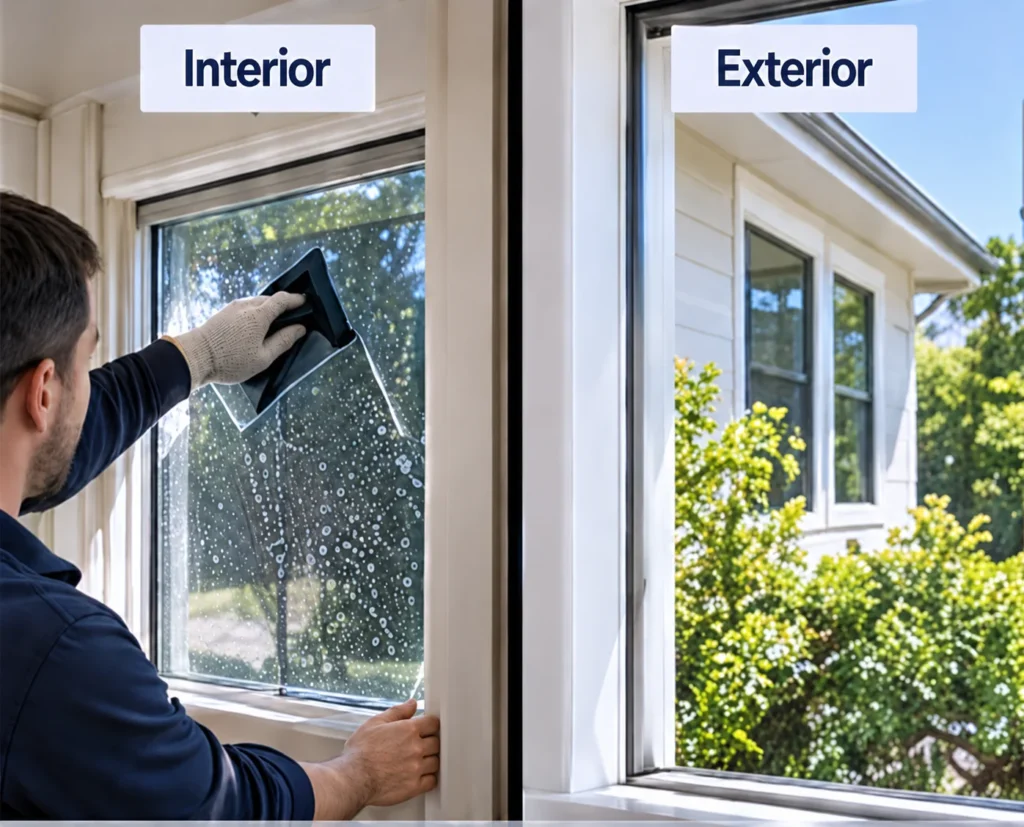
A room can stay uncomfortably hot even when the air conditioner is running. Strong sunlight may also create screen glare, make furniture feel hot, and reduce comfort near large windows. Window film can help, but choosing where the film goes is just as important as choosing the film itself.
Most architectural window films are applied to the inside surface of the glass. However, exterior window film is made for situations where outside application works better because of the glass construction, solar exposure, building design, or limited indoor access.
Neither option is automatically better for every window. The right choice starts with the glass, the reason you want film, and the film-to-glass compatibility specified by the manufacturer.
Interior vs Exterior Window Film at a Glance
| Situation | Interior Window Film | Exterior Window Film |
|---|---|---|
| Standard accessible windows | Often the first option | Usually not necessary unless the product or glass requires it |
| Strong heat from direct sun | Can work very well with compatible film | Often considered when greater exterior-side solar control is needed |
| Low-E or complex insulated glass | Compatibility must be checked | May be recommended for certain glazing systems |
| Difficult interior access | Can be inconvenient or impossible | Often a practical solution |
| Skylights and atrium glass | Depends on access and glass construction | Commonly considered |
| Protection from weather | Film stays protected indoors | Film must be specifically made for exterior exposure |
| Maintenance | Usually easier | Requires more attention because it faces outdoor conditions |
| Product selection | Generally wider | More specialized |
The International Window Film Association explains that most films are designed for interior use, while exterior films use coatings made for harsher outdoor exposure. It also notes that exterior placement can provide a solar-performance advantage because the film works before another glass layer interferes with its optical properties.
Why Is Window Film Usually Installed on the Inside?
Interior application is common because the film stays protected from rain, wind, dust, outdoor cleaning, and changing weather. This controlled environment can make maintenance easier and allows many film products to perform without constant exterior exposure.
There is also a much wider selection of interior solar control, decorative, privacy, glare reduction, and specialty films. For many standard residential and commercial windows, an interior product is therefore the practical starting point.
ProLayers architectural film is usually installed on the inside, while specially designed exterior products are used for exceptions such as difficult-to-access areas and certain skylight applications.
Interior film can be a strong choice when your main concern is a hot living room, uncomfortable afternoon sun, computer glare, fading interiors, or excessive brightness. The important part is choosing a film approved for the exact type of glass in the window.
When Exterior Window Tint Film Makes More Sense
The purpose of exterior window tint film is not simply to put the same tint on the opposite side of the window. Exterior-grade products are built differently because they have to face direct sunlight, moisture, dirt, temperature changes, and exterior cleaning.
Exterior application becomes especially useful when the glass or building creates conditions that make an interior installation less suitable.
When Indoor Access to the Glass Is Difficult
Some windows look easy to reach from outside but are almost impossible to access from the room. Large fixed furniture, equipment, high atriums, roof glazing, unusual architecture, or restricted areas may block the interior surface.
In these situations, an exterior-rated film can allow the glass to be treated without disturbing everything inside the building. This can be especially useful for commercial properties, skylights, conservatory roofs, and large architectural glazing.
Purpose-built exterior films are offered specifically for challenging areas such as skylights, atriums, spandrels, and other hard-to-reach glazing.
When Solar Heat Needs to Be Managed Earlier
With interior film, sunlight reaches the glass before it reaches the film. With an outside-applied product, incoming solar energy reaches the film first.
This difference can make exterior solar control useful for glass that receives strong direct sunlight. It may help manage solar heat before more of that energy moves through the glazing system.
That does not mean every hot window requires exterior window film. A high-quality interior film may still be the correct solution when the glass is compatible and the desired performance can be achieved without exterior application.
When the Glazing System Needs Special Consideration
Modern windows are not all made the same way. A window may be single-pane, double-pane, triple-pane, laminated, tempered, tinted, coated, insulated, or made with Low-E technology.
The location of coatings and the construction of the insulated glass unit can affect which film is suitable. Certain combinations can absorb or retain more heat than others, so selecting film only by shade or appearance can be a mistake.
Film manufacturers note that thermal breakage risk can be higher with some interior solar-film applications on modern glazing systems, and recommend checking the film and glass configuration before choosing the application side.
The safest rule is simple: choose the film after identifying the glass, not before.
Our products
Six film families, one for every kind of glass
For outside-applied film, see Exterior Films. For interior solar control, start with Architectural Solar Control. Every family has its own page with the full range.
- Clarity IR Max
- Nano Ceramic
- Climate IQ 50
- Skyline
- Harmony DR
- Soft Tone
- Eco Silver 20
- X-Clear 70
- X-Eco Silver 15
- X-Hybrid DR 15
- Safety 4 Clear
- Security 8 Clear
- Security 8 Silver
- Security 14 Clear
- X-Safety 7
- AG 6 Clear
- Frost
- White Out
- Black Out
- Poly Layers
- V6 Comfort BLK
- V10 Ceramic IR BLK
- V16 Ceramic IR MAX
- V6 Core
- V10 Reactive
- V16 Velocity
Is Exterior Window Tint for Homes Worth Considering?
Yes, exterior window tint for homes can be a useful option, but it should solve a real glazing or access issue rather than being selected simply because it sounds more powerful.
For example, a home may have large sun-facing windows that become extremely hot during part of the day. Another property may have roof glass, a sunroom, or an unusual window system where exterior application is more suitable.
Homeowners may also consider exterior film when they want solar control but the selected film cannot safely or effectively be used on the room-side surface of their specific glazing.
A proper assessment should look at the window construction, orientation, existing coatings, frame condition, climate exposure, and the performance data for the selected film.
Exterior Window Tint Is Not the Same as Regular Interior Tint
You should not take an interior film and simply place it on the outside of the window. A true exterior window tint is designed for exterior exposure. Its construction and protective surface are made to handle conditions that an indoor film normally does not face.
Using the wrong product outside may lead to poor appearance, coating damage, adhesive failure, lifting edges, or reduced service life. Manufacturer instructions should always control which side of the glass a product can be applied to.
Interior solar window film should not simply be used as an exterior product, because its construction is not designed for long-term sunlight exposure from that side.
What About Double-Pane and Low-E Windows?
This is where many simple online answers become misleading. Having double-pane glass does not automatically mean that you need exterior film. It also does not mean that any interior film is safe for the window.
The correct choice depends on the complete glazing system. That includes the type of glass, pane construction, Low-E coating location, existing tint, film absorption, window size, edge condition, and manufacturer compatibility requirements.
For this reason, a film-to-glass compatibility check should come before installation on insulated or coated windows. The goal is to select a product that provides the required solar control without creating an unsuitable thermal condition in the glass.
Interior Film Is Still the Better Choice for Many Windows
Exterior film solves important situations, but interior application remains a strong option for many residential and commercial projects.
If the inside glass surface is accessible and the selected film is approved for the glazing, keeping the film indoors protects it from weather and outdoor contaminants. Cleaning is normally easier as well.
Interior application also provides access to a broad range of looks and functions. Depending on the product, this may include neutral solar film, reflective film, decorative finishes, glare control, privacy treatments, and clear films that make only a small visual change to the glass.
So if your existing glass works safely with an interior product, there may be no practical reason to move the application outside.
Choosing Film for Heat, Glare, Privacy, or Appearance
The side of installation should also match what you actually want the window to do. If harsh afternoon sunlight is making a room difficult to use, solar control and glare reduction should be the main priorities. If privacy is the concern, visible light conditions and the appearance from both sides of the glass become more important.
For properties where the exterior appearance matters, the selected film should also be checked from outside. Reflective and darker films can noticeably change the look of a building, while more neutral options may preserve more of the original glass appearance.
Do not choose a film only because it looks dark. Darkness, heat control, reflectivity, glare reduction, and visible light are related factors, but they are not the same measurement.
Keep reading
More window film guides for your home
How to Decide Between Interior and Exterior Film
A good window film recommendation should follow a clear process rather than starting with a product name.
- Identify the glass: Determine whether the window is single-pane, insulated, laminated, tempered, tinted, or Low-E.
- Identify what is making the space uncomfortable: Heat, glare, privacy, fading concerns, and excessive brightness can require different film characteristics.
- Check access on both sides: Large furniture, roof glazing, security restrictions, or architectural features may make one surface more practical than the other.
- Review film-to-glass compatibility: The selected film should be approved for the glazing construction and application side.
- Compare performance using the same testing basis: A darker film should not automatically be treated as the stronger solution.
- Consider appearance and maintenance: The best-performing film still needs to fit the way the property is used and maintained.
Interior vs Exterior Window Film: Which Should You Choose?
Choose interior window film when the glass is compatible, the room-side surface is accessible, and the required solar or privacy performance can be achieved with an interior-rated product.
Consider exterior window film when the outside surface is a better technical fit, interior access is restricted, the glazing requires a different approach, or exterior-side solar control provides a meaningful advantage.
The decision should never be based on “inside is always better” or “outside blocks more heat, so outside is always better.” Architectural glass is more complex than that. The right combination is the film that works with your specific glass and solves the actual comfort, glare, privacy, or solar-control issue without creating another one.
Choose the Film Around the Glass, Not Just the Tint Shade
If hot windows, strong glare, or difficult glazing are making a room uncomfortable, choosing between interior and exterior film should come before choosing a shade.
Start by identifying the glass and the result you need. Then compare compatible film options based on their application side, solar performance, appearance, maintenance requirements, and manufacturer guidance.
FAQ
Frequently asked questions
Eight quick answers about interior and exterior window film.
Still have a question? Ask usDoes exterior window film work better than interior film for heat?
Exterior placement can have a solar-control advantage because the film interacts with incoming solar energy before it passes through the glass. However, actual performance depends on the film, glass, and complete glazing system.
Can exterior window film be used on residential windows?
Yes. Exterior window tint for homes can be used when an exterior-rated product is suitable for the glass and the project conditions. It may be considered for difficult glazing, strong solar exposure, roof glass, or windows where interior application is not the preferred option.
Can I put a normal interior window tint on the outside?
No. Use only a product that the manufacturer approves for exterior application. Exterior films have protective construction designed for outdoor conditions.
Is exterior film safe for double-pane windows?
It can be, but the answer depends on the exact film and insulated glass unit. Double-pane glass should be checked using the film manufacturer’s compatibility guidance instead of assuming that one application side works for every window.
Which side is better for Low-E glass?
There is no single answer for every Low-E window. The location and type of Low-E coating, glass construction, and selected film all matter, so compatibility should be confirmed before choosing interior or exterior placement.
Does exterior window tint require more maintenance?
Usually, it receives more exposure to rain, dirt, pollution, exterior washing, and other outdoor conditions. Cleaning and care should therefore follow the instructions for the exact exterior-grade product.
Can window film help a room that gets too hot in the afternoon?
A properly selected solar control window film can reduce unwanted solar heat and glare while allowing you to keep the window and view. The correct film depends on the direction of the glass, glazing type, desired light level, and application side.
Is exterior film only for commercial buildings?
No. Exterior films can be used on both residential and commercial glazing when the product is designed for that application and is compatible with the glass.
Contact us
Inside or outside? Tell us about the glass.
Send us the window size, the type of glass and which side you can reach, and we will point you to the right next step.
Contact us-
Visit
12551 Steepleway Blvd SWB B101
Houston, TX 77065 - Hours Mon to Fri 9am to 5pm