RESIDENTIAL / Choosing & Buying
IR Window Film: VLT TSER & IR Rejection Without Confusion
IR Window Film: VLT TSER & IR Rejection Without Confusion. See how each number affects light, heat and comfort before you choose.
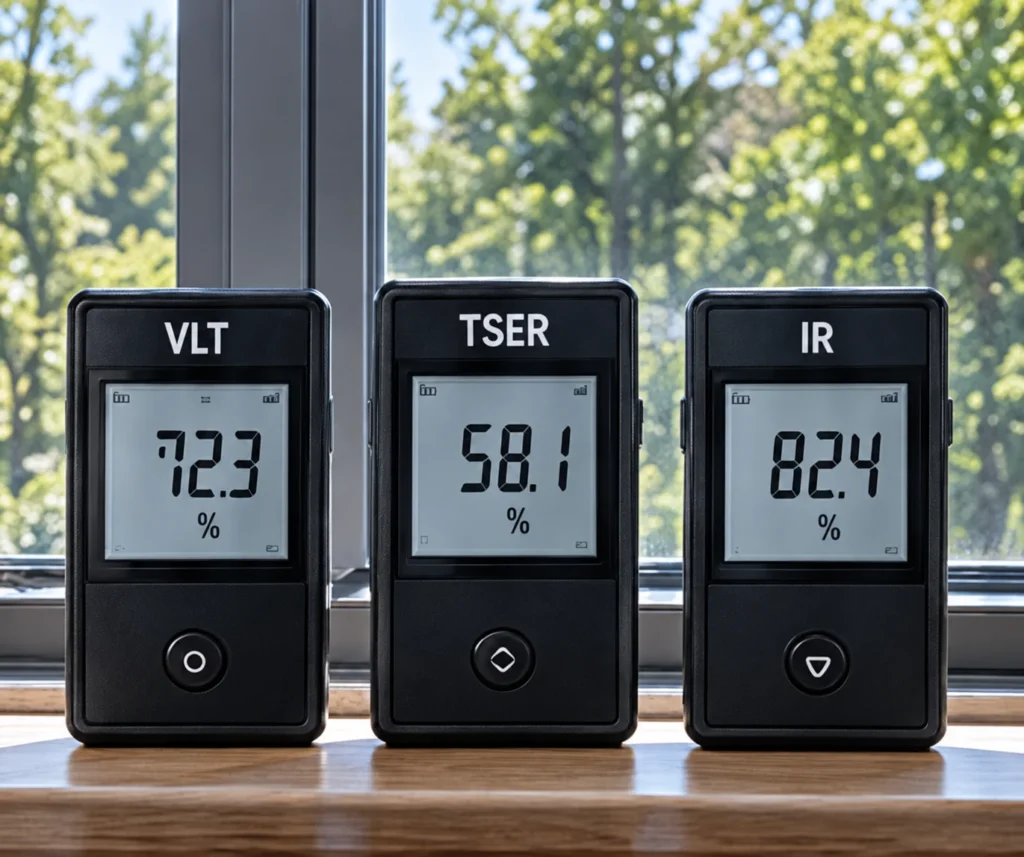
Choosing window film becomes confusing when every product sheet shows different percentages. One film may promote high IR rejection, another may focus on TSER, while another highlights VLT. If you do not know what these numbers measure, it is easy to compare the wrong specifications.
VLT, TSER and IR rejection describe different parts of window film performance. VLT tells you how much visible light passes through the glass. TSER measures total solar energy rejected, while IR rejection focuses on infrared energy. These values should be read together rather than treated as competing numbers. NFRC also evaluates visible transmittance and solar heat gain when rating window and film performance.
What Do VLT, TSER and IR Rejection Mean?
Here is the simple answer:
- VLT: How much visible light passes through the filmed glass.
- TSER: How much total solar energy is rejected.
- IR Rejection: How much infrared radiation is rejected under the stated test method.
- SHGC: How much solar heat gain enters through the glazing system.
These numbers answer different questions. One helps with daylight, another gives a wider picture of solar heat control, and another describes performance against infrared radiation.
This difference matters when comparing window tinting residential homes solutions. A large percentage printed on a brochure does not automatically mean that film is the right choice for your room, glass or comfort goals.
What Is VLT in Window Film?
VLT means Visible Light Transmission. It is the percentage of visible light that passes through the glass and film.
A higher VLT means more daylight can enter the room. A lower VLT means less visible light passes through, creating a darker appearance.
For homeowners, VLT can affect:
- Interior brightness
- Exterior appearance
- Daytime privacy
- Screen glare
- Views through the glass
- Overall room atmosphere
For example, someone with a bright living room may want to reduce glare without making the space feel dark. Another homeowner may have large exposed windows and want more daytime privacy.
That is why there is no single “best” VLT for every property.
Does Lower VLT Mean Better Heat Rejection?
Not necessarily.
A darker film may reduce visible light strongly, but darkness alone does not tell you how well the film controls total solar energy. Modern solar-control and ceramic films can manage solar energy while keeping more natural daylight than traditional dark films.
This is one reason you should never judge IR window tint by shade alone.
What Is TSER in Window Film?
TSER means Total Solar Energy Rejected. It describes how much of the total solar energy hitting the glazing system is rejected rather than entering the interior.
Solar energy contains ultraviolet, visible and infrared portions. TSER considers the wider solar-energy picture instead of looking only at infrared wavelengths. Industry guidance therefore recommends using TSER when comparing overall solar heat performance.
In simple terms:
Higher TSER = more total solar energy rejected under the stated test conditions.
This makes TSER useful when your main concerns include:
- Rooms becoming uncomfortable in direct sun
- Large west- or south-facing windows
- Excessive afternoon heat
- Strong glare
- Hot areas close to windows
- Heavy cooling demand during sunny periods
TSER should still be considered with VLT. A film that rejects more solar energy but makes a room much darker may not suit someone who wants to preserve natural light.
Our products
Six film families, one for every kind of glass
For solar-control and ceramic films with published VLT and TSER data, start with Architectural Solar Control. Every family has its own page with the full range.
- Clarity IR Max
- Nano Ceramic
- Climate IQ 50
- Skyline
- Harmony DR
- Soft Tone
- Eco Silver 20
- X-Clear 70
- X-Eco Silver 15
- X-Hybrid DR 15
- Safety 4 Clear
- Security 8 Clear
- Security 8 Silver
- Security 14 Clear
- X-Safety 7
- AG 6 Clear
- Frost
- White Out
- Black Out
- Poly Layers
- V6 Comfort BLK
- V10 Ceramic IR BLK
- V16 Ceramic IR MAX
- V6 Core
- V10 Reactive
- V16 Velocity
What Does IR Rejection Mean?
IR rejection measures how much infrared radiation is rejected by the glazing and film under a particular test method.
Infrared radiation is one part of the solar spectrum and is closely associated with the warmth people feel from sunlight. This is why IR window film and ceramic films often promote infrared performance.
However, IR rejection does not describe the entire solar spectrum.
This is important because IR results can depend on the wavelength range used during testing. IWFA guidance notes that one IR figure may represent the full 780–2500 nm infrared range while another may represent a much narrower range. Those percentages should not automatically be treated as equal.
Is 95% IR Rejection Automatically Better Than 70%?
A film showing a very high IR rejection percentage can still have a lower total solar energy rejection than another film.
The reason is simple: IR rejection measures infrared performance, while TSER looks at total solar energy.
When comparing IR tint, always check:
- The IR wavelength or range used for testing
- TSER
- VLT
- Glass type used during testing
- Whether the figure represents film alone or filmed glass
- The exact product and shade being compared
Without that context, a large IR percentage can create the wrong impression.
VLT vs TSER vs IR Rejection
| Specification | What It Tells You | What to Look For |
|---|---|---|
| VLT | Amount of visible light passing through | Choose based on daylight, appearance, privacy and glare needs |
| TSER | Total solar energy rejected | Higher values generally indicate stronger overall solar control |
| IR Rejection | Infrared radiation rejected | Check the testing range before comparing percentages |
| SHGC | Solar heat entering through glazing | Lower values generally mean less solar heat gain |
The key point is that these specifications work together.
A homeowner should not choose a film simply because one number is higher.
Why High IR Rejection Does Not Tell the Whole Story
Infrared percentages are easy to market because the numbers can look impressive. But a high IR figure should be treated as one part of the specification rather than the final answer.
Imagine two films.
Film A has stronger infrared rejection but allows more total solar energy into the room. Film B has a lower-looking IR percentage but stronger TSER under comparable test conditions.
If your main goal is overall solar heat control, Film B may be the more suitable option.
This is why TSER is especially useful when comparing films with similar VLT levels. Window film industry guidance also recommends comparing TSER between films of similar visible light transmission for a fairer comparison.
What Is Ceramic IR Window Film?
Ceramic IR window film uses advanced film construction designed to manage solar energy without depending only on a heavily dark or mirror-like appearance.
For homeowners, ceramic products are often considered when they want a balance between daylight, solar control and a more neutral appearance.
However, the word “ceramic” should not be treated as a performance rating by itself.
Two ceramic films can have different:
- VLT levels
- TSER ratings
- IR rejection figures
- Reflectance
- Glare reduction
- Appearance
Always compare actual product data instead of choosing only because the word ceramic appears in the product name.
How to Choose Residential Window Film Using These Numbers
Start with the issue you want the film to address.
A. Your Room Is Too Bright
Look closely at VLT and glare performance.
A lower VLT can reduce the amount of visible light entering the room, which may help with strong brightness around televisions, monitors and seating areas.
Avoid going darker than necessary if you still want plenty of daylight.
B. Your Room Gets Too Hot in Direct Sun
Compare TSER first, especially between films with similar VLT.
Then review IR rejection as supporting information.
This gives you a more complete picture than selecting a product only because it advertises a large infrared percentage.
C. You Want Heat Control Without a Very Dark Window
Compare high-VLT solar-control or ceramic films.
These options are designed for homeowners who want to keep a brighter interior while improving solar performance.
The correct choice depends on the glass, orientation, desired appearance and performance targets.
D. You Want More Privacy
Do not rely on IR rejection.
Privacy is mainly connected to visible light, reflectance, lighting conditions and the selected shade. Daytime privacy can also change after sunset when interior lights are brighter than the exterior.
Keep reading
More window film guides for your home
Five Questions to Ask Before Comparing Window Film
Before choosing a product, ask:
- What is the VLT on my type of glass?
- What is the TSER?
- How was the IR rejection measured?
- What wavelength range was used for the IR figure?
- Is the published performance based on the same glass configuration I have?
These questions make it much easier to compare films on equal terms.
They also help separate useful performance data from numbers that may look impressive without enough testing context.
Common Mistakes When Reading Window Tint Specifications
Choosing the Highest Number
A higher percentage is only useful when you understand what is being measured.
A 90% IR value and a 60% TSER value cannot be compared directly because they measure different things.
Assuming Darker Film Is Always Cooler
Visible darkness and solar heat rejection are not the same measurement.
A modern solar-control film may keep a lighter appearance while still providing meaningful solar performance.
Comparing Different Testing Methods
IR percentages from different wavelength ranges are not equal comparisons.
Check the test conditions before using IR rejection to compare two products.
Looking at Film Without Considering the Glass
Window-film performance is affected by the glazing system.
NFRC’s film certification data, for example, reports different performance values according to glass configurations, showing why the same film should not be expected to produce identical results on every window.
Which Number Matters Most for Residential Window Film?
There is no single number that answers every question.
For overall solar energy control, TSER is one of the most useful figures to review. For room brightness and appearance, VLT matters greatly. For infrared-specific performance, check IR rejection along with its test range.
A useful way to think about it is:
- VLT tells you what happens to the light you see.
- IR rejection tells you about one part of solar radiation.
- TSER gives you a wider view of total solar energy rejection.
Use all three together when comparing residential window films.
Choose Window Film Based on the Complete Specification
Window film numbers become much easier to understand once you stop treating every percentage as the same measurement.
VLT helps you judge daylight and appearance. TSER shows overall solar-energy rejection. IR rejection shows infrared performance under a stated testing method. Together, these values can help you make a much more informed choice for your home.
If strong sunlight, glare or uncomfortable rooms are pushing you toward residential window film, compare the complete specification rather than choosing the darkest film or the biggest IR number.
FAQ
Frequently asked questions
Seven quick answers about VLT, TSER and IR rejection.
Still have a question? Ask usWhat does VLT mean on window tint?
VLT means Visible Light Transmission. It shows the percentage of visible light passing through the filmed glass. Higher VLT generally means a brighter and clearer appearance, while lower VLT creates a darker appearance.
Is higher TSER better?
If your goal is stronger solar heat control, a higher TSER generally means more total solar energy is being rejected under the stated test conditions. Compare products using similar glass and VLT levels for a fair comparison.
Is IR rejection the same as heat rejection?
No. IR rejection only describes infrared performance. Total solar heat involves more than infrared energy, so TSER gives a broader view of solar-energy rejection.
Is ceramic IR film better than regular tint?
It depends on the exact products being compared. Ceramic construction may provide useful solar-control characteristics, but you should still compare VLT, TSER, IR performance and appearance instead of relying on the material name alone.
Can clear window film reject heat?
Yes. A film does not have to appear extremely dark to provide solar control. Different film technologies manage visible and infrared portions of solar energy differently, which is why VLT and TSER should be reviewed separately.
What is the difference between IR window film and IR tint?
The phrases IR window film and IR tint are commonly used for films designed or marketed around infrared control. The important factor is not the wording but the tested performance of the exact product.
What should I compare when choosing window tint for my home?
Start with your goal, then compare VLT, TSER, IR rejection, glare control, appearance and glass compatibility. Avoid choosing a product from one headline percentage alone.
Contact us
Confused by the numbers? Tell us about the room.
Send us the window size, which way it faces and the film data you are comparing, and we will point you to the right next step.
Contact us-
Visit
12551 Steepleway Blvd SWB B101
Houston, TX 77065 - Hours Mon to Fri 9am to 5pm