RESIDENTIAL / Choosing & Buying
10 Questions to Ask Before Hiring a Window Tinter
10 Questions to Ask Before Hiring a Window Tinter, so you avoid poor film, bubbles and warranty confusion on your home.
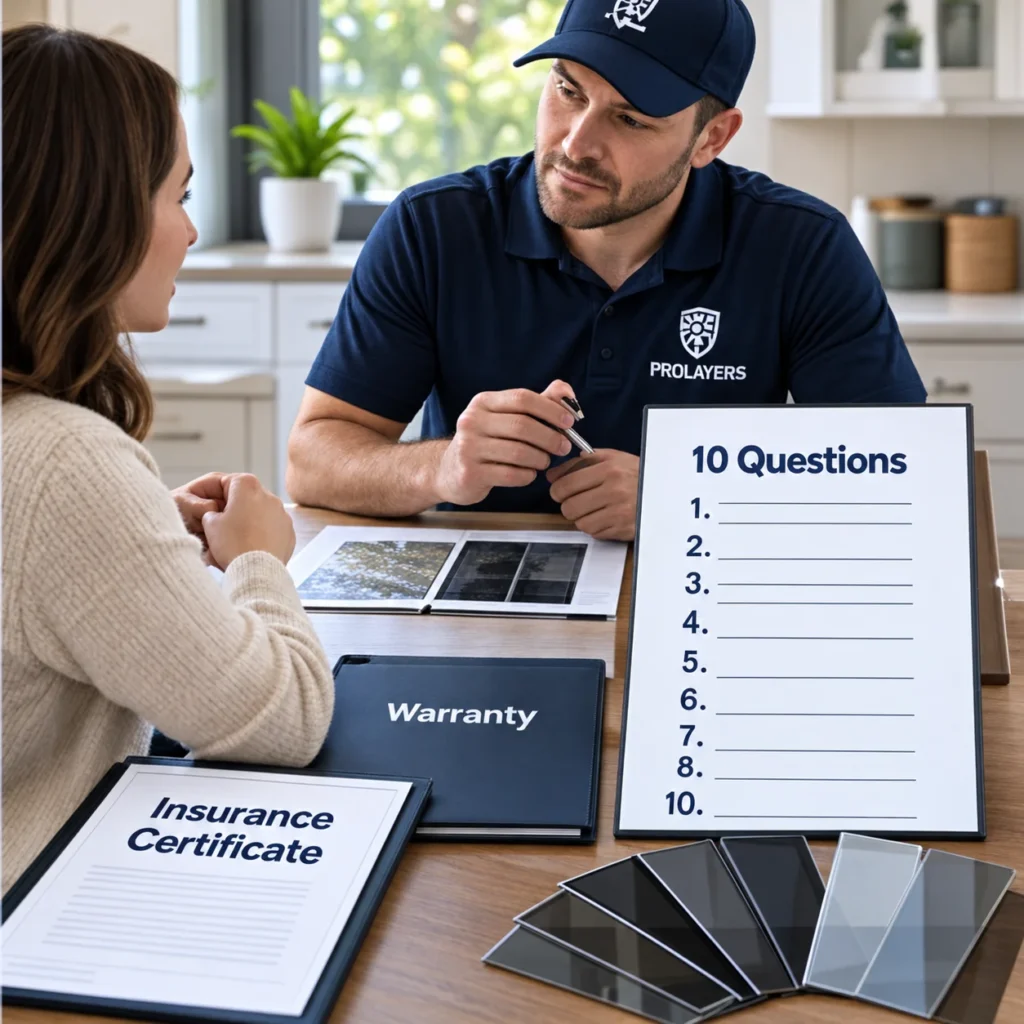
Hiring a window tinter should not start with one question: “How much will it cost?” The film, your glass type, the installer’s experience, and the warranty can all affect the final result.
A good window tint should match what you actually want to fix. You may want less heat in a west-facing room, better daytime privacy, lower glare on screens, UV protection, or a cleaner look without covering the windows with heavy blinds.
That is why choosing the right dealer matters just as much as choosing the film. Before any work begins, ask clear questions and make sure you understand exactly what is being recommended for your home.
“The best window tint choice is not always the darkest film. It is the film that fits your glass, room, comfort needs, and preferred appearance.”
What Should You Check Before Hiring a Window Tinter?
Before you agree to a residential window film project, check a few basic things first.
A professional dealer should be able to explain:
- What type of film is being recommended
- Why that film suits your windows
- How light or reflective the finished glass may look
- Whether your glass type has been considered
- What the warranty covers
- What preparation is required
- How the film should be cleaned and maintained
- What you should expect after installation
You do not need to become a window film expert. You only need enough clear information to make a confident decision.
1. How Much Residential Window Tinting Experience Do You Have?
Start by asking about experience with residential properties.
Home windows are not the same as vehicle windows. Houses can include single-pane glass, double-pane units, Low-E glass, large fixed panels, sliding doors, bathroom glass, and windows facing different directions.
Ask whether the dealer regularly works on homes similar to yours. If you have large living-room windows, a sunroom, or older glass, mention it during the first conversation.
A dealer who understands residential applications should ask questions about your windows before recommending a film.
Good Questions to Ask
- Do you regularly work on residential properties?
- Have you worked with windows like mine?
- Can you show examples of similar projects?
- How do you decide which film is suitable for each room?
Clear answers are a good sign. Very general answers may mean you need to ask more questions.
2. What Window Film Do You Recommend for My Main Concern?
Do not accept “ceramic tint” or “solar film” as the complete answer.
Ask what type of film is being recommended and, more importantly, why.
If your living room becomes uncomfortable in the afternoon, your priority may be solar heat control. If you work beside a large window, glare may matter more. Street-facing rooms may need privacy, while furniture and flooring may need protection from UV exposure.
For homeowners comparing ceramic window tint for house applications, appearance should also be part of the conversation. Some people want a very light and natural view, while others prefer stronger shading or daytime privacy.
The recommendation should match the room instead of using one film for every window without explanation.
3. Can You Explain the Film Specifications in Simple Words?
Technical data is useful only when you understand what it means.
Ask the dealer to explain the important specifications in basic language. You may see terms such as visible light transmission, solar heat control, reflectance, UV rejection, or glare reduction.
You do not need to choose a film by the biggest number on a brochure.
Ask how each specification will affect your actual room.
For example:
- Will the room become noticeably darker?
- Will the glass look reflective from outside?
- Will I still be able to see through the window clearly?
- Is this film mainly for heat, glare, privacy, or several needs?
- How will the appearance change during the day?
If you are preparing your own 10 ceramic tint question checklist, this is one of the most important areas to include because performance and appearance should be considered together.
Our products
Six film families, one for every kind of glass
For ceramic and other residential solar-control films, start with Architectural Solar Control. Every family has its own page with the full range.
- Clarity IR Max
- Nano Ceramic
- Climate IQ 50
- Skyline
- Harmony DR
- Soft Tone
- Eco Silver 20
- X-Clear 70
- X-Eco Silver 15
- X-Hybrid DR 15
- Safety 4 Clear
- Security 8 Clear
- Security 8 Silver
- Security 14 Clear
- X-Safety 7
- AG 6 Clear
- Frost
- White Out
- Black Out
- Poly Layers
- V6 Comfort BLK
- V10 Ceramic IR BLK
- V16 Ceramic IR MAX
- V6 Core
- V10 Reactive
- V16 Velocity
4. Can I See the Film Before Making a Decision?
Film can look different on a sample than it does across a full window.
Ask to see physical samples, previous projects, or a digital visual example when available.
Some tint businesses also use a visual tinter or similar film simulation tool. These tools can help customers compare tint shades and get a general idea of how different options may look before making a choice.
A preview should support your decision, not replace a real film sample or professional recommendation.
Compare More Than One Option
Instead of looking at only one film, ask to compare:
- A lighter option
- A medium option
- A stronger solar-control option
- A privacy-focused option if privacy is important
- A ceramic option when a less reflective appearance is preferred
Seeing different choices side by side can make the final decision much easier.
5. Will You Check My Glass Before Recommending the Film?
This question is easy to miss.
Before choosing window film, the dealer should understand what type of glass is already installed in your home.
Ask whether the windows are single-pane, double-pane, Low-E, tempered, laminated, or another type if you are unsure. You can also ask the dealer how they determine glass compatibility.
Do not choose a film only because it looks good in another house.
The same film may not be the right choice for every window, orientation, or glass system. A proper recommendation should consider the existing glass as part of the decision.
6. What Does the Installation Process Include?
You should know what will happen before the dealer arrives.
Ask what needs to be moved away from the windows, whether curtains or blinds need to be removed, and how the glass will be prepared before film is applied.
Good preparation matters because the film is installed directly onto the glass surface.
Ask what the dealer does to reduce visible contamination, protect the surrounding area, and finish the edges properly.
You should also ask what the film may look like immediately after installation. Your dealer can explain the expected curing process and when the glass can be cleaned normally again.
7. What Warranty Comes With the Film?
Never treat the word “warranty” as enough information.
Ask what is actually covered and request the applicable warranty information for the selected product.
Useful questions include:
- Is the warranty for the film, workmanship, or both?
- What types of film failure are covered?
- Is warranty registration required?
- Are there any cleaning or maintenance requirements?
- Who should I contact if I notice an issue later?
Keep your project documents and warranty information after the work is completed.
This is especially important when several years may pass before you ever need to check the warranty.
8. What Exactly Is Included in the Project?
Get the scope clearly explained before work starts.
If several rooms are being tinted, make sure you know which windows are included and which film will be used on each area.
A clear project scope can include:
- Rooms or windows being covered
- Film product selected for each area
- Number of windows or glass panels
- Special access requirements
- Expected appearance
- Warranty information
- Basic aftercare instructions
This makes it much easier to compare two recommendations properly.
Do not compare only the final figure. One proposal may include a different film, different coverage, or different warranty terms than another.
Keep reading
More window film guides for your home
9. Can You Show Similar Residential Window Film Projects?
Photos and project examples can tell you more than a long sales pitch.
Ask to see work completed on homes with similar windows or similar goals.
If privacy is your main concern, ask for privacy-film examples. If you want a bright room with better solar control, ask to see lighter film options rather than very dark tint.
Pay attention to the details in project photos.
Look at:
- Overall glass appearance
- Consistency between windows
- Edge finishing
- Reflective appearance
- Interior brightness
- How the film looks from outside
You can also check recent customer feedback, especially comments related to communication, workmanship, cleanliness, and after-service support.
10. What Should I Expect After the Film Is Installed?
Your questions should not stop when the film reaches the glass.
Ask how to care for the windows afterward.
The dealer should explain when cleaning can begin and what type of cleaning method is suitable for the installed film.
You should also know who to contact if you notice something that does not look right after the recommended settling period.
Ask for Simple Aftercare Instructions
Before the project is complete, confirm:
- When the windows can be cleaned
- Which cleaning products are suitable
- Which tools should be avoided
- What appearance is normal during curing
- Who handles warranty questions
- How to report a possible installation issue
Simple aftercare can help protect the finished surface and prevent unnecessary damage.
Good Window Tinter vs Warning Signs
| What to Check | Good Sign | Warning Sign |
|---|---|---|
| Film recommendation | Explains why a film fits your needs | Recommends one film without asking questions |
| Product information | Gives clear film details | Uses only terms like “premium” or “best” |
| Glass assessment | Asks about glass type and windows | Ignores the existing glass |
| Appearance | Shows samples or project examples | Cannot explain how the film may look |
| Warranty | Provides clear warranty information | Gives only verbal promises |
| Project scope | Clearly explains what is included | Details remain unclear |
| Questions | Answers technical questions simply | Avoids specific answers |
| Aftercare | Explains cleaning and curing | Gives no instructions after installation |
You do not need every conversation to sound highly technical. You simply need clear, specific answers.
How to Choose the Right Ceramic Window Tint for a House
Ceramic film is often considered when homeowners want solar control while keeping a cleaner, less metallic appearance.
However, “ceramic” alone does not tell you whether a film is right for your home.
Think about the room first.
A west-facing family room may have different needs from a bathroom window, bedroom, home office, or large glass door.
Base Your Choice on Four Things
- Comfort: Identify where excessive sunlight, heat, or glare is affecting the room.
- Natural Light: Decide how much daylight you want to keep inside.
- Privacy: Consider whether daytime privacy is important and remember that lighting conditions can affect how privacy films perform.
- Appearance: Decide whether you prefer a nearly clear look, a darker shade, or a more reflective exterior appearance.
The dealer can then match a film to those priorities instead of asking you to choose based only on shade.
Questions You Should Ask Yourself Before Calling a Dealer
The installer needs good information from you as well.
Before contacting a window film dealer, walk through the rooms you want to improve.
Ask yourself:
- Which rooms become uncomfortable during the day?
- What time does direct sunlight enter?
- Is glare affecting a television or computer?
- Do I want to keep my outside view?
- Do I need daytime privacy?
- Do I want the windows to stay bright?
- Are certain windows much larger than others?
- Is the main goal comfort, glare, UV protection, privacy, or appearance?
These answers help make the first consultation more useful.
Make the Decision Based on the Film, Glass, and Dealer
A window tint project should make your home more comfortable without leaving you confused about what was installed.
The best way to avoid disappointment is to ask questions before choosing the film.
Confirm the product, understand why it is being recommended, check how it may affect the appearance of your windows, review the warranty, and make sure the dealer understands your existing glass.
ProLayers supplies window film solutions for different residential needs, while qualified dealers handle the installation. Instead of guessing which film belongs on your windows, speak with a local professional who can review your space and recommend the right option.
FAQ
Frequently asked questions
Seven quick answers about hiring a window tinter.
Still have a question? Ask usHow do I choose a good window tinter?
Choose a dealer who asks about your goals, explains the recommended film clearly, checks the window application, provides warranty information, and can show relevant previous work. Avoid choosing only on the lowest quote.
Is ceramic window tint good for home windows?
It can be a strong option for many residential applications, especially when homeowners want solar control with a less metallic appearance. The correct film still depends on your glass, room orientation, desired light level, and comfort goals.
Should every window in my house use the same film?
Not always. Different rooms can have different sunlight, privacy, glare, and appearance requirements. A professional recommendation may use different solutions for different areas of the home.
Should I ask for a film sample?
Yes. Samples can help you compare shade, reflectivity, and overall appearance. Looking at completed projects can also help you understand how the film may look across a larger glass area.
What should be included in a window tint warranty?
Ask for the actual warranty terms instead of assuming all warranties are the same. Confirm what is covered, who provides the coverage, whether registration is needed, and what you should do if an issue develops.
Is darker window tint always better for heat control?
No. Darkness alone should not be used to judge film performance. Ask the dealer to explain the film specifications and how the recommended product addresses your heat, glare, privacy, and natural-light requirements.
What is a visual tinter?
A visual tinter is a digital visualization tool that can show how different film shades or types may look before a customer chooses an option. It can be useful for comparing appearance, but the final decision should also consider actual film samples, technical specifications, and the window application.
Contact us
Ready to talk to a dealer? Tell us about your windows.
Send us the window sizes, which rooms they are in and what you want to fix, and we will point you to the right next step.
Contact us-
Visit
12551 Steepleway Blvd SWB B101
Houston, TX 77065 - Hours Mon to Fri 9am to 5pm