COMMERCIAL / Solar & Energy Control
Perimeter Heat Gain? Window Film for Offices Can Help
Perimeter Heat Gain? Window Film for Offices Can Help reduce heat, glare and uneven comfort near glass without replacing it.
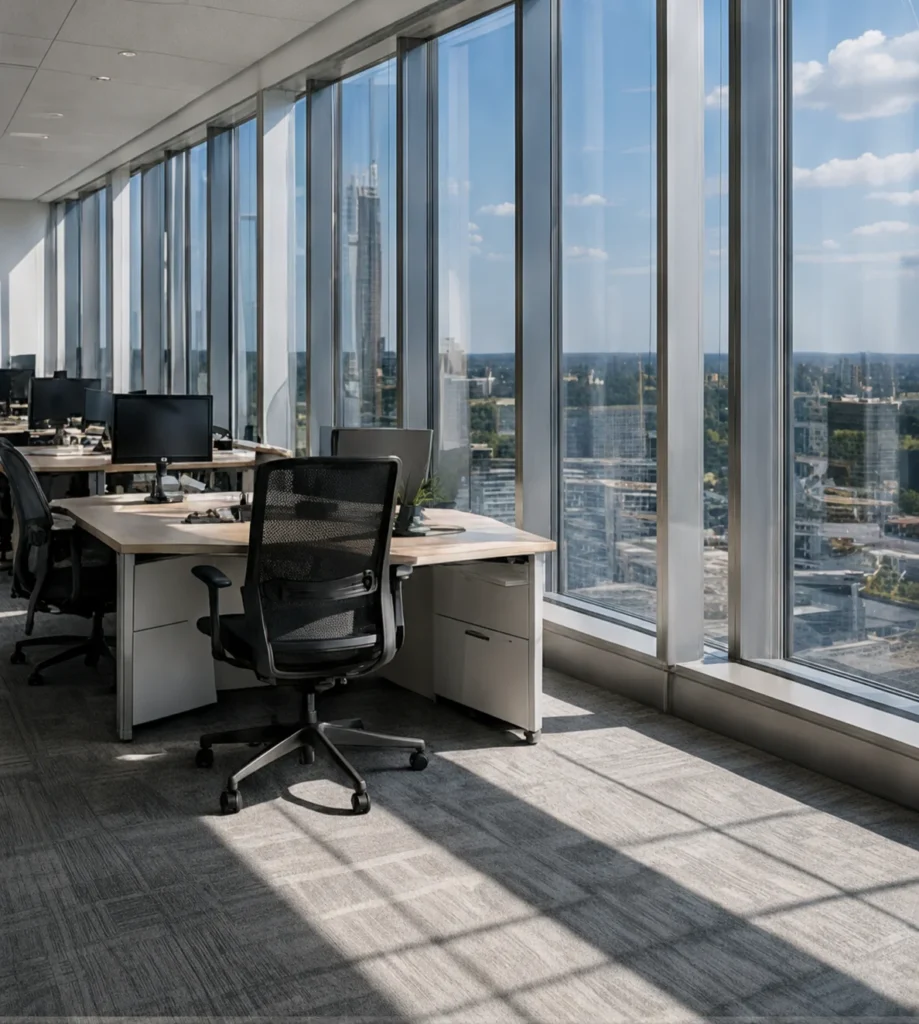
Open-plan offices can look bright and modern, but large glass areas often create a very different experience for the people sitting near them. One row of desks may feel comfortable while employees closer to the windows deal with strong sunlight, rising heat, screen glare, and an air-conditioning system that never seems to catch up.
This is known as perimeter heat gain. It is especially noticeable around large exterior windows, curtain walls, corner offices, and sun-facing sections of a building. The right window film for offices can help control solar heat at the glass while keeping the existing windows, views, and open-plan layout.
Why Do Perimeter Areas in Offices Become So Hot?
Sunlight carries energy through office glazing. Once that energy reaches floors, desks, walls, furniture, and other interior surfaces, those materials warm up and release heat into the workspace.
That is why a thermostat in the middle of an office may show a comfortable temperature while employees beside the windows still feel hot. The HVAC system is trying to manage the whole floor, but the perimeter zone is receiving a different heat load.
The effect can become more noticeable when an office has:
- Large floor-to-ceiling windows
- West-facing glazing exposed to afternoon sun
- Multiple glass walls around corner spaces
- Desks placed close to exterior windows
- Limited exterior shading
- Older or high-solar-gain glazing
- Computer screens positioned opposite bright windows
- Blinds that are frequently left open
For facility managers, this can become more than a temperature issue. Employees may move away from certain desks, close blinds throughout the day, adjust thermostats repeatedly, or use portable fans to stay comfortable.
How Commercial Window Film Helps Control Solar Heat Gain?
Commercial window film is applied to compatible existing glazing to change how solar energy passes through the glass. Depending on the film selected, part of the incoming solar energy can be reflected, absorbed, or otherwise controlled before it becomes unwanted heat inside the office.
This means the glass itself becomes part of the solar-control strategy rather than relying only on blinds or additional cooling after the heat has already entered the workspace. U.S. Department of Energy guidance specifically notes that window film can reduce the solar heat gain coefficient of glazing and improve thermal comfort near perimeter areas.
For open-plan offices, this can help create a more balanced environment between desks near exterior glass and workstations deeper inside the floor.
What Changes Can Window Film Make in an Open-Plan Office?
The biggest advantage is not simply making a room feel cooler. A properly selected film can address several connected issues at the same time.
| Office Issue | What Employees Notice | How Window Film Can Help |
|---|---|---|
| Perimeter heat gain | Desks near glass feel hotter | Reduces solar heat passing through glazing |
| Screen glare | Monitors become difficult to see | Controls excessive visible light |
| Uneven comfort | Window-side employees feel warmer | Helps reduce temperature differences caused by sunlight |
| Closed blinds | Natural views disappear | Solar-control film can reduce the need to keep blinds closed |
| HVAC pressure | Cooling works harder around sunny zones | Lower solar gain can reduce part of the cooling load |
| Interior exposure | Flooring and furniture receive direct sunlight | Film can reduce UV exposure and solar intensity |
The result depends on the building, glazing, orientation, film type, weather, and HVAC system. Window film should therefore be selected for the actual glass and performance goal rather than simply choosing the darkest option.
Keep the Daylight Without Keeping All the Heat
Many office managers hesitate to use tint because they do not want a bright workplace to become dark. That concern is reasonable.
Modern commercial window films are available in different levels of visible light transmission, solar control, reflectivity, and appearance. This allows a project team to look for a balance between daylight and heat control instead of treating them as an all-or-nothing choice.
The National Fenestration Rating Council uses performance measures such as Solar Heat Gain Coefficient and Visible Transmittance when evaluating window-film energy performance. A lower SHGC means less solar heat passes through, while a higher visible transmittance allows more visible light through the glazing.
These values make it easier to compare films based on performance rather than judging them only by color.
Our products
Six film families, one for every kind of glass
For sun-exposed commercial glass, start with Architectural Solar Control. Every family has its own page with the full range.
- Clarity IR Max
- Nano Ceramic
- Climate IQ 50
- Skyline
- Harmony DR
- Soft Tone
- Eco Silver 20
- X-Clear 70
- X-Eco Silver 15
- X-Hybrid DR 15
- Safety 4 Clear
- Security 8 Clear
- Security 8 Silver
- Security 14 Clear
- X-Safety 7
- AG 6 Clear
- Frost
- White Out
- Black Out
- Poly Layers
- V6 Comfort BLK
- V10 Ceramic IR BLK
- V16 Ceramic IR MAX
- V6 Core
- V10 Reactive
- V16 Velocity
What Should You Check Before Choosing Window Film for Offices?
The right window film for offices starts with the building, not the film sample. A film that works well on one office tower may not be appropriate for another building with different glazing, exposure, or appearance requirements.
1. Glass Type
The existing glass construction needs to be identified before film selection. Single-pane, insulated glass, tinted glass, laminated glass, and coated glazing can react differently to solar-control products.
NFRC guidance recommends checking the location, type, and condition of the existing windows before matching film to the glass.
2. Building Orientation
A facade receiving strong afternoon sun may require a different approach from a shaded elevation.
Instead of treating every window equally, commercial projects can be evaluated by orientation and exposure. This can help address the areas where perimeter heat gain is actually occurring.
3. Solar Heat Gain Coefficient
SHGC is one of the most useful values when heat control is the priority.
It describes how much solar heat is transmitted through the glazing system. When comparing suitable products, this metric provides more useful information than simply asking whether a film looks light or dark.
4. Visible Light Transmission
VLT or visible transmittance indicates how much visible light passes through.
An office that depends heavily on daylight may need a different balance than a conference room where strong sunlight and presentation-screen glare are the bigger concerns.
5. Interior and Exterior Appearance
Some films have a noticeable reflective appearance, while others provide a more neutral look.
Building owners, architects, facility managers, and property managers should consider how the film will look from both inside and outside before selecting a product.
Window Film vs Blinds vs Replacement Glass
Perimeter heat gain can be addressed in several ways. The best solution depends on the building and project goals.
| Option | Heat Control | Glare Control | Keeps Exterior View | Uses Existing Glass |
|---|---|---|---|---|
| Interior blinds | Limited to moderate | Good when closed | Usually reduced | Yes |
| Shades | Varies | Good | Often reduced | Yes |
| Solar-control window film | Designed for solar control | Can reduce glare | Often yes | Yes |
| Replacement glazing | Depends on selected glass | Depends on glazing | Yes | No |
Blinds can help with brightness, but employees often need to close them before they provide meaningful glare control. This can remove the daylight and view that made the glass attractive in the first place.
Replacing glazing can provide strong building-envelope improvements, but it is a much larger project. Commercial window film provides another option when the goal is to improve the performance of suitable existing glass without replacing the complete window system.
GSA evaluations have also studied window film as a retrofit approach for reducing cooling demand and improving occupant comfort in commercial buildings.
Where Commercial Window Film Makes the Most Sense
Solar-control film can be considered anywhere glass is creating a noticeable comfort imbalance.
Common office applications include:
- Open-plan perimeter workstations
- Executive offices with large windows
- Glass-front conference rooms
- Reception and waiting areas
- Corner offices
- Training rooms
- Coworking spaces
- High-rise office floors
- Office towers with curtain-wall glazing
- Break rooms exposed to direct sunlight
- Street-facing commercial offices
A building does not always need the same film across every interior space. Different elevations or zones can have different requirements while still maintaining a coordinated exterior appearance.
Keep reading
More commercial solar control guides
Can Window Film Reduce Office Glare Too?
Yes, certain solar-control films can address both heat and excessive brightness. Screen glare becomes especially frustrating when sunlight falls directly across monitors or creates a strong contrast between a bright window and a darker computer display.
Employees may respond by closing blinds, turning screens away from the windows, increasing monitor brightness, or moving to another desk.
The right window film for offices can reduce excessive visible light entering through the glass while preserving useful daylight. Film selection matters because stronger glare control usually changes visible light transmission as well.
That is why glare, heat control, daylight, views, and appearance should be considered together.
Commercial Window Film Should Be Selected by Performance, Not Shade
A darker piece of film does not automatically mean it is the right heat-control product. This is one of the most important points for commercial buyers.
If you are comparing window film commercial options, ask for technical performance information for the film and relevant glass configuration rather than selecting a product only because it looks dark.
Useful specifications can include:
- Solar Heat Gain Coefficient
- Visible Light Transmission
- Solar reflectance
- Interior visible reflectance
- Exterior visible reflectance
- Glare reduction
- UV performance
- Film construction
- Recommended glazing applications
- Warranty requirements
- Glass compatibility
These values help architects, facility teams, building owners, and property managers compare products using measurable criteria.
Common Mistakes When Addressing Perimeter Heat Gain
One common mistake is lowering the office thermostat whenever window-side employees complain about heat. This may make interior areas too cold without addressing the sunlight entering through the perimeter glass.
Another mistake is choosing a film by appearance alone. The darkest film is not automatically the best choice for every office, and a very clear-looking film should not automatically be assumed to provide poor solar control.
It is also important not to ignore glass compatibility. Film and glazing work together as a system, so the existing window construction should be reviewed before a product is selected.
Finally, heat and glare should not be treated as exactly the same issue. A workspace may have serious glare without severe heat gain, or noticeable heat without requiring aggressive glare control.
A Better Approach to Office Perimeter Comfort
Look at the affected elevation, time of day, workstation position, glass type, glare conditions, and whether blinds are normally open or closed.
From there, suitable commercial window film options can be compared according to the actual objective: solar heat control, glare reduction, daylight preservation, appearance, or a balance of several requirements. This makes the project more useful than simply adding tint to every piece of glass.
Make Perimeter Workspaces Comfortable Again
Employees should not have to choose between natural daylight and a comfortable desk. When direct sun through exterior glazing creates hot perimeter zones, screen glare, closed blinds, and uneven comfort, the right window film for offices can provide a practical retrofit without replacing suitable existing glass.
Evaluate the glazing, identify the sun-exposed zones, compare technical performance, and choose a film that matches the actual needs of the building.
FAQ
Frequently asked questions
Quick answers about perimeter heat gain and window film for offices.
Still have a question? Ask usDoes commercial window film make an office dark?
Not necessarily. Film is available in different visible light transmission levels. Some products are designed to provide solar control while maintaining a relatively bright interior. The right choice depends on the office, glass, orientation, and daylight requirements.
Is window film suitable for west-facing office windows?
West-facing glazing is a common area of concern because direct afternoon sun can create strong heat and glare near perimeter workstations. A compatible solar-control film can be evaluated to reduce this solar load.
Can window film help employees sitting beside large windows?
It can help when solar heat and glare through the glazing are contributing to discomfort. Film works at the glass, so it addresses incoming solar energy before relying only on additional air conditioning inside the room.
Will commercial window film stop HVAC problems?
Window film is not a repair for an undersized, damaged, or poorly balanced HVAC system. It can reduce solar heat gain through suitable glazing, which may reduce one important source of perimeter cooling load.
Is window film better than office blinds?
They perform different jobs. Blinds are useful for privacy and direct light control, while solar-control film works continuously at the glazing. In some offices, film can reduce the need to keep blinds closed simply to manage heat or screen glare.
What matters most when choosing window film for a commercial building?
Start with the glass type, building orientation, solar exposure, SHGC, visible light transmission, reflectivity, appearance, and the specific reason the film is being considered. A qualified professional should also confirm that the selected product is compatible with the existing glazing.
Contact us
Glass causing heat or glare? Tell us about the building.
Send us which side of the building gets the sun, the rooms affected and roughly how much glass is involved, and we will point you to the right next step.
Contact us-
Visit
12551 Steepleway Blvd SWB B101
Houston, TX 77065 - Hours Mon to Fri 9am to 5pm