RESIDENTIAL / Choosing & Buying
Ceramic House Window Tint Bubbling Purple or Peeling?
Ceramic House Window Tint Bubbling Purple or Peeling? See what causes film failure, what can be fixed and when to replace it.
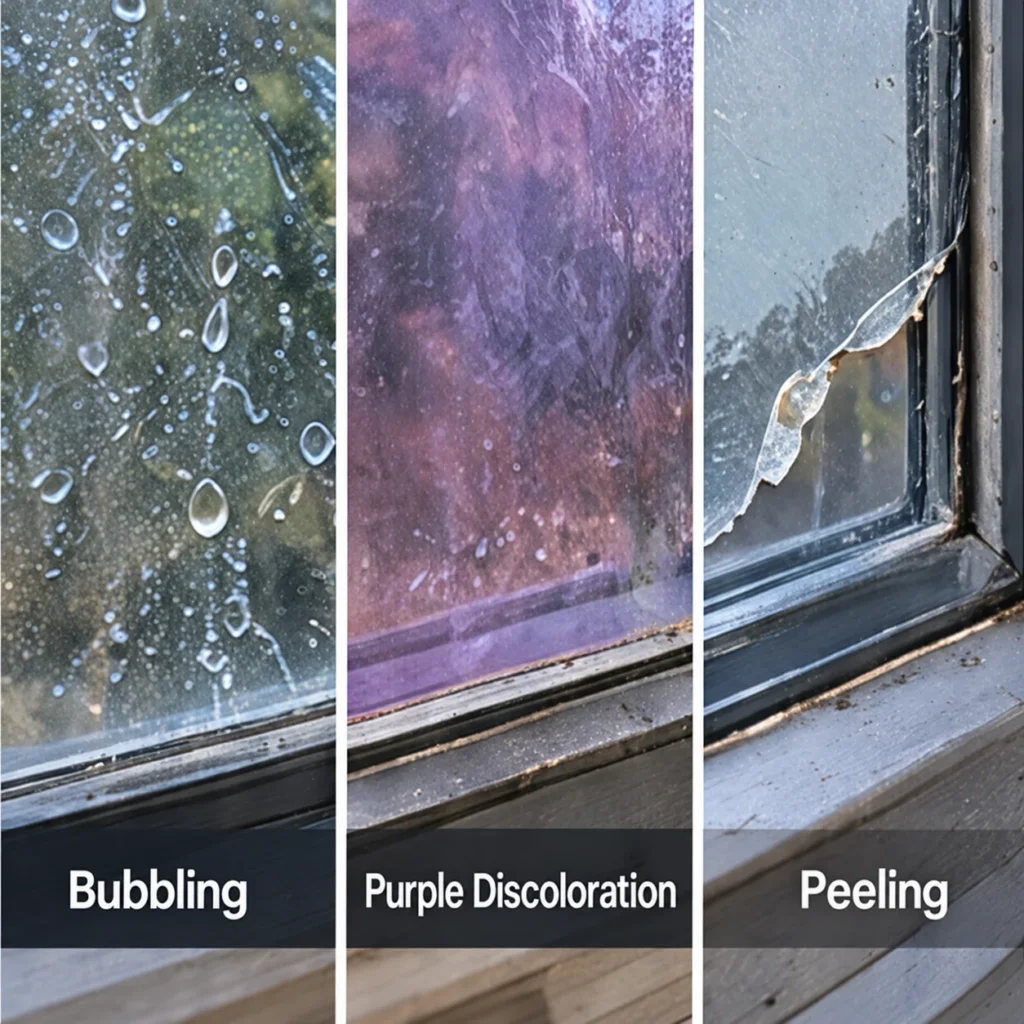
Window film should make your glass look cleaner and help create a more comfortable indoor space. When the film starts bubbling, turning purple, lifting at the edges, or peeling away from the glass, something is no longer working as it should.
The cause may be old adhesive, incorrect film selection, poor glass preparation, damage, or years of exposure to sunlight and changing temperatures. The right solution depends on whether the film is newly applied or has been on the window for a long time.
Why Does House Window Tint Bubble, Turn Purple, or Peel?
Bubbling, color change, and peeling are different signs of window film failure. Sometimes only one appears. In older film, several can happen at the same time.
Here is a simple way to understand what you are seeing:
| What You See | What It May Mean | What to Do |
|---|---|---|
| Small cloudy areas on new film | Moisture may still be drying | Follow the installer’s curing instructions |
| Large or growing bubbles | Adhesive or application issue | Arrange an inspection |
| Purple or uneven color | Film may be aging or fading | Consider replacement |
| Film lifting at corners | Edge adhesion is weakening | Have the pane checked |
| Widespread peeling | Film is losing its bond | Replacement may be needed |
| Hazy or distorted glass | Film or adhesive may be deteriorating | Inspect the film and glass |
A newly tinted window can sometimes look slightly cloudy while moisture dries. This is different from older film that suddenly develops large bubbles, peeling edges, or permanent color changes.
What Causes Bubbling in Residential Window Film?
Window tint bubbles appear when the film is no longer sitting evenly against the glass. The exact cause can depend on the age of the film, glass preparation, adhesive, film type, and installation quality.
Poor Glass Preparation
The glass needs to be properly prepared before residential film is applied. Dust, grease, residue, or very small particles can prevent parts of the film from making clean contact with the surface.
These areas may remain visible or become more noticeable later as the window goes through regular heating and cooling.
Aging Adhesive
Window film does not remain new forever. After long-term exposure to sunlight and changing glass temperatures, the adhesive can gradually lose its ability to hold the film flat.
Bubbles may begin in one area and spread across the pane. Pressing the bubble down usually does not solve an adhesive failure underneath the film.
Choosing the Wrong Film for the Glass
Not every window film should be placed on every type of residential glass. Glass construction, coatings, pane design, orientation, and solar exposure can all affect product selection.
Buying window tint rolls for house windows without checking compatibility may save a step at the beginning but can create bigger issues later. Film should be selected for the actual glass and the goal of the room.
Why Does Old Window Tint Turn Purple?
Purple or uneven color usually means the appearance of the film itself has changed. This is commonly seen in older dyed films after long-term exposure to sunlight.
The original shade may slowly fade before developing a purple, blue, or uneven look. Once the color change is inside the film, cleaning the glass will not bring the original appearance back.
Modern ceramic house window tint is often considered by homeowners who want solar control without relying only on a traditional dark dyed appearance. However, ceramic technology still needs the correct product selection and proper application.
A high-quality film cannot correct poor preparation, unsuitable glass compatibility, or damaged adhesive.
Our products
Six film families, one for every kind of glass
For ceramic and other residential solar-control films, start with Architectural Solar Control. Every family has its own page with the full range.
- Clarity IR Max
- Nano Ceramic
- Climate IQ 50
- Skyline
- Harmony DR
- Soft Tone
- Eco Silver 20
- X-Clear 70
- X-Eco Silver 15
- X-Hybrid DR 15
- Safety 4 Clear
- Security 8 Clear
- Security 8 Silver
- Security 14 Clear
- X-Safety 7
- AG 6 Clear
- Frost
- White Out
- Black Out
- Poly Layers
- V6 Comfort BLK
- V10 Ceramic IR BLK
- V16 Ceramic IR MAX
- V6 Core
- V10 Reactive
- V16 Velocity
Why Does Window Film Peel From the Edges?
Peeling normally becomes noticeable around corners or edges first. These areas can be affected by age, cleaning, physical contact, contamination, or a weakening adhesive bond.
Common causes include:
- Weak adhesion around the film edges
- Dust or contamination under the film
- Aging adhesive
- Incorrect trimming or application
- Harsh cleaning products
- Rough cloths or abrasive cleaning pads
- Scraping or picking at the film
- Damage around an already lifted corner
Once an edge remains open, dust and moisture can get underneath the film. The lifted area may then become larger and more noticeable.
Trying to glue a peeling corner back onto the glass is usually not a clean long-term solution.
Can Bubbling or Peeling House Tint Be Repaired?
The answer depends on what caused the damage.
A small issue on recently applied film should first be checked by the installer. It may be related to drying, a small application issue, or an area that needs professional attention.
Older film with widespread bubbling, permanent purple color, large peeling areas, or visible separation is different. In these cases, replacing the affected film is usually more practical than trying to hide the damage.
Avoid:
- Puncturing bubbles with a needle
- Cutting the film with a blade
- Pulling loose corners
- Using strong heat without professional guidance
- Applying household glue under peeling film
These methods can make the appearance worse and may create extra work when the failed film is removed.
Should You Choose Ceramic Tint as a Replacement?
Ceramic film can be a strong option for residential windows, but choosing a product only because it says “ceramic” is not enough.
Homeowners planning to ceramic tint house windows should also consider what they actually want the film to achieve.
Important factors include:
- Solar heat control
- Visible light transmission
- Glare reduction
- UV protection
- Interior appearance
- Exterior reflectance
- Daytime privacy
- Glass compatibility
- Warranty terms
- Room orientation and sun exposure
For example, a west-facing living room with heavy afternoon sun may have different needs from a bathroom window where privacy is the main concern.
If you are comparing brand-name ceramic window tint for home, compare the actual product specifications, intended glass use, appearance, warranty, and dealer support instead of making the decision from a brand name alone.
Is Limo Tint Good for Home Windows?
The term limo tint for home windows is normally used when someone wants very dark glass and strong daytime privacy.
However, darker does not automatically mean better heat control.
A very dark tint can reduce natural daylight and significantly change how a room looks from both inside and outside. Some homeowners may like this appearance, while others may find it too dark.
Your film should be selected according to the main goal.
If heat is the concern, compare solar-control performance. If privacy is the concern, look at visible light and reflectance. If glare is making screens difficult to use, select a film designed around glare control.
Ceramic Film vs Dark Tint vs Basic Window Film
| Film Option | Why Homeowners Consider It | What You Should Check |
|---|---|---|
| Ceramic residential film | Heat control, glare control and comfortable appearance | Glass compatibility, film specifications and shade |
| Very dark tint | Privacy and lower visible light | Daylight loss, appearance and glass suitability |
| Basic roll film | Easy availability | Film quality, intended glass type and adhesive |
| Reflective solar film | Solar control and daytime privacy | Reflectance, exterior appearance and glass compatibility |
| Decorative film | Privacy or visual design | Light level, pattern and room use |
The best residential film is not automatically the darkest option. It is also not simply the film with the most popular name.
A better choice is one that matches your glass, sun exposure, privacy needs, interior comfort, and preferred appearance.
Keep reading
More window film guides for your home
Are Window Tint Rolls for House Windows Worth Buying?
Buying film by the roll can look convenient, especially when several windows need to be covered. The main concern is that residential glass is not the same in every home.
Before choosing a roll, you need to know:
- What type of glass you have
- Whether the film is designed for that glass
- How much natural light you want to keep
- Whether privacy is needed during the day or at night
- Which windows receive the strongest sunlight
- Whether heat, glare, fading, or appearance is the main concern
The film should fit the window. The window should not be forced to fit whatever film happens to be available. See DIY against professional installation for more.
How Can You Reduce the Risk of Future Film Failure?
Good residential window film still needs proper care after it is applied.
Follow these basic steps:
- Follow the installer’s curing instructions
- Do not pick at corners or edges
- Clean the film with a soft microfiber cloth
- Avoid abrasive pads and sharp tools
- Use cleaning products suitable for window film
- Report growing bubbles or lifting early
- Keep product and warranty information
- Have unusual haze or separation inspected
If several windows start showing the same type of failure, do not treat every pane as an unrelated issue. Similar damage across multiple windows may help an installer identify the likely cause. Our window film care guide covers cleaning in more detail.
When Should Old House Window Film Be Replaced?
Minor appearance changes do not always mean immediate replacement. However, continuing film failure should not simply be ignored.
Arrange an inspection when you notice:
- Bubbles becoming larger
- New bubbles appearing across the glass
- Peeling spreading inward from the edges
- Purple or uneven color
- Permanent haze
- Film separating from the glass
- A distorted view through the window
- Similar failure appearing on several panes
If the film is already badly damaged, removing it also gives the installer a chance to check the glass before another product is selected.
Replace Failed Film With the Right Residential Window Solution
Bubbling, peeling, and purple color are more than appearance issues. They can show that the film or its adhesive is no longer behaving as intended.
Instead of choosing the darkest roll or the first ceramic option you find, start with your actual needs. Consider the glass type, room orientation, sunlight, privacy, glare, and the amount of daylight you want to keep.
ProLayers supplies residential window film through its dealer network. A local dealer can help determine which film suits your glass and connect you with the appropriate installation service for replacing failed window film.
FAQ
Frequently asked questions
Seven quick answers about bubbling, purple and peeling window film.
Still have a question? Ask usIs bubbling normal after residential window tint is applied?
Some moisture or cloudy areas may be visible while newly applied film is drying. Follow the specific curing instructions provided for the film. Large, growing, or persistent bubbles should be inspected.
Can purple window tint become clear again?
If the film itself has permanently changed color, cleaning will not restore its original shade. Replacement is normally the practical option once the discoloration comes from the film rather than dirt on the glass.
Can I press bubbles out of old house window tint?
You should avoid pressing or puncturing old bubbles. If the adhesive underneath has already weakened, pushing the film flat does not restore the original bond.
Does ceramic window film never bubble or peel?
No film should be treated as completely failure-proof. Film quality matters, but glass preparation, compatibility, application, adhesive condition, exposure, and cleaning also affect long-term results.
Is a big-name ceramic window tint for home always the best choice?
No single brand or film is automatically right for every house. Compare specifications, glass compatibility, appearance, warranty, solar-control needs, and dealer support before choosing.
Is darker house tint better for blocking heat?
Not automatically. Darkness mainly affects visible light. A residential film can look lighter while still being designed for solar control, so technical performance should be considered separately from shade.
Can I put new window film over bubbling old tint?
Installing a new film directly over damaged, bubbling, or peeling material is not the proper way to correct failed film. The condition of the old material and glass should be assessed before a replacement is applied.
Contact us
Film bubbling or peeling? Tell us about the window.
Send us photos, how old the film is and which windows are affected, and we will point you to the right next step.
Contact us-
Visit
12551 Steepleway Blvd SWB B101
Houston, TX 77065 - Hours Mon to Fri 9am to 5pm