RESIDENTIAL / Choosing & Buying
Dark Window Tint for Car: How Dark Should It Be?
Dark Window Tint for Car: How Dark Should It Be? Choose the right car or home film shade for visibility, privacy and glare.
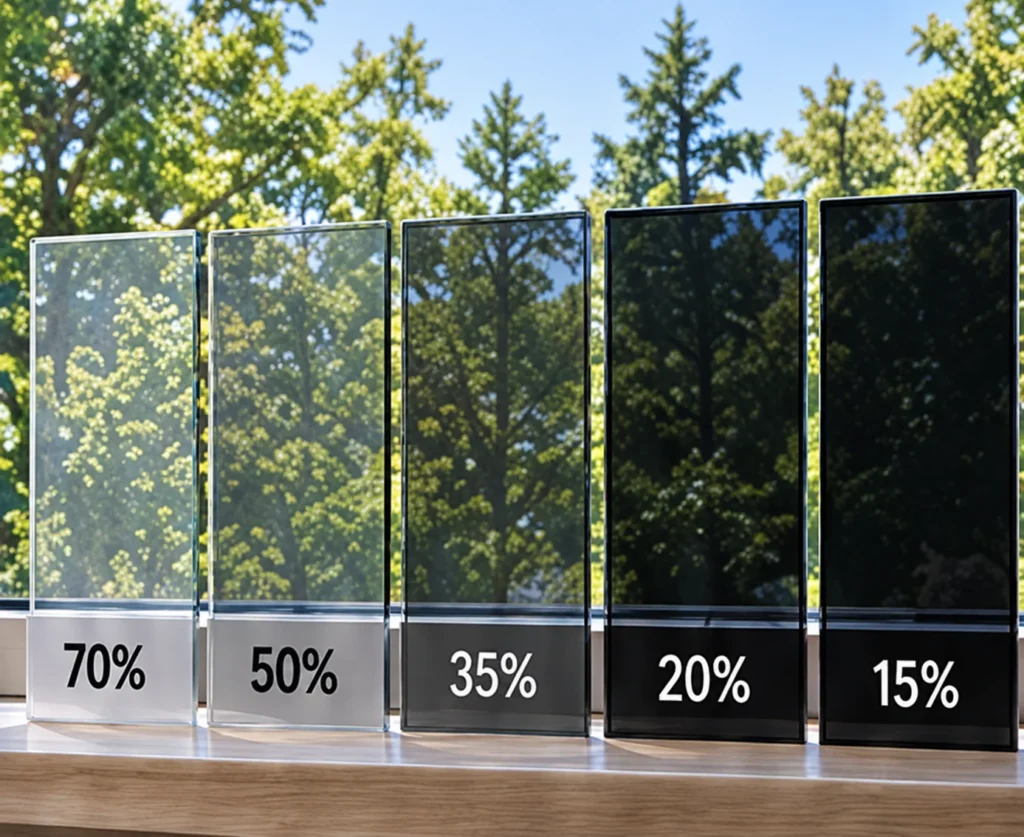
Choosing window film is not simply about picking the darkest shade available. A film that looks perfect in bright daylight may feel too dark while driving at night, while a very light film may not give the privacy or glare control you wanted.
Whether you are considering dark window tint for car windows or window tint film for house glass, the right darkness depends on how the glass is used. Visibility, privacy, natural light, glare, appearance, local rules, and film technology should all be considered before choosing a shade.
What Does Window Tint Darkness Actually Mean?
Window film darkness is usually explained using Visible Light Transmission, also called VLT. This tells you how much visible light can pass through the film.
A higher VLT means more visible light passes through the glass, so the film looks lighter. A lower VLT means less visible light passes through, making the glass appear darker.
For example:
- 70% VLT looks very light and keeps the glass clear.
- 50% VLT gives a light tinted appearance.
- 35% VLT creates a noticeable medium shade.
- 20% VLT gives the glass a dark appearance.
- 5% VLT is extremely dark and allows very little visible light through.
The darkest option is not automatically the best option. Your ideal shade should match what you actually want the film to do.
How Dark Should Car Window Tint Be?
For most drivers, the right tint is the one that gives enough privacy and glare control without making normal driving uncomfortable.
A dark window tint for car glass can create a strong appearance and improve daytime privacy. However, as less visible light passes through the window, seeing through the glass can become harder in low-light conditions.
Before selecting a shade, think about:
- How often you drive at night
- Whether you drive on poorly lit roads
- How much privacy you want
- Which vehicle windows are being tinted
- The existing shade of the factory glass
- Local window tint regulations
- Whether appearance or visibility matters more
A car used mainly in a bright city environment may have different needs from a vehicle regularly driven on dark roads at night.
Light Tint: Around 50% to 70% VLT
Light films are suitable for drivers who want to keep a clear view through their windows. They create a subtle appearance rather than making the vehicle look heavily tinted.
This range may suit people who want:
- Strong outward visibility
- A lighter factory-style appearance
- Less change to the original glass color
- Comfortable visibility during evening driving
- A subtle rather than aggressive tint style
A lighter film can also be useful when darker shades are restricted on certain vehicle windows.
Medium Tint: Around 30% to 40% VLT
Medium shades sit between a light appearance and heavily darkened glass. They can make the vehicle look noticeably tinted without creating the same dark appearance as lower-VLT films.
This level is often considered when the driver wants:
- Noticeable tint
- Better daytime privacy
- Less visible brightness through side windows
- A balanced appearance
- Reasonable outward visibility
For many drivers, this range can be easier to live with than extremely dark glass.
Dark Tint: Around 15% to 25% VLT
This range creates a clearly dark appearance. Someone standing outside the vehicle will usually find it harder to see the interior during bright daytime conditions.
A dark window tint for car windows may appeal to drivers who place a high value on privacy and appearance. The trade-off is that the view through the glass becomes darker as available light decreases.
Extra care is important if the vehicle is regularly driven after sunset.
Very Dark Tint: Around 5% VLT
Very dark film gives glass an almost black appearance in many lighting conditions. It can create strong privacy during daylight but greatly reduces the amount of visible light coming through the window.
This shade should not be selected only because it looks good in a sample.
Consider:
- Night visibility
- Parking and reversing
- Side visibility
- Local regulations
- The position of the window
- Existing factory glass darkness
The film must work for everyday use, not only for appearance.
Our products
Six film families, one for every kind of glass
For car windows, start with Automotive. For home glass, see Architectural Solar Control or Decorative and Privacy. Every family has its own page with the full range.
- Clarity IR Max
- Nano Ceramic
- Climate IQ 50
- Skyline
- Harmony DR
- Soft Tone
- Eco Silver 20
- X-Clear 70
- X-Eco Silver 15
- X-Hybrid DR 15
- Safety 4 Clear
- Security 8 Clear
- Security 8 Silver
- Security 14 Clear
- X-Safety 7
- AG 6 Clear
- Frost
- White Out
- Black Out
- Poly Layers
- V6 Comfort BLK
- V10 Ceramic IR BLK
- V16 Ceramic IR MAX
- V6 Core
- V10 Reactive
- V16 Velocity
Window Tint Darkness Comparison
| Tint Level | General Appearance | Suitable For | Main Consideration |
|---|---|---|---|
| 70%+ VLT | Very light | High visibility and subtle appearance | Limited privacy |
| 50% VLT | Light | Everyday visibility | Mild darkening |
| 35% VLT | Medium | Balance of appearance and privacy | Check local rules |
| 20% VLT | Dark | Stronger daytime privacy | Lower night visibility |
| 5% VLT | Very dark | Maximum dark appearance | Significant visibility and legal considerations |
The numbers are useful for comparison, but the final appearance can also depend on the original glass.
Is Darker Window Tint Better for Heat?
Not always.
A common mistake is choosing very dark film because you assume darker glass automatically means better heat control. Darkness mainly describes visible light transmission, while solar performance depends on the technology and construction of the film.
This means a lighter high-performance film may be a better choice than a basic dark film when your main concern is heat rather than privacy.
Instead of looking only at tint darkness, consider what you want to control:
- Visible brightness
- Glare
- Solar heat
- UV exposure
- Daytime privacy
- Exterior appearance
Choosing by performance and purpose gives you a more useful result than simply selecting the darkest shade.
What About Dark Grey Tint?
Dark grey tint is often chosen because it creates a clean, neutral appearance. It can suit drivers who want darker-looking windows without changing the glass toward an unusual color.
The exact appearance still depends on the film, glass, vehicle interior, exterior lighting, and viewing angle. A shade sample should therefore be treated as a guide rather than assuming it will look identical on every vehicle.
A dark grey tint may be suitable when you want:
- A neutral smoked appearance
- A darker exterior look
- Reduced visible brightness
- Daytime privacy
- A finish that works with many vehicle colors
However, appearance should still be balanced with visibility and local tint rules.
Check Window Tint Laws Before Choosing a Dark Shade
Vehicle tint regulations are different from one location to another. Rules can also change depending on which window is being covered.
The windshield, front side windows, rear side windows, and rear windshield may not all have the same legal requirements.
Before choosing a dark film, check:
- Minimum permitted VLT
- Windshield restrictions
- Front side window requirements
- Rear window requirements
- Vehicle-specific exemptions
- Local inspection or enforcement rules
Do not assume that a shade you see on another vehicle is legal for yours.
Keep reading
More window film guides
How Dark Should Window Film for a House Be?
Residential glass has very different requirements from vehicle glass.
When choosing window tint film for house windows, think about what happens inside the room throughout the day. A bedroom, living room, home office, bathroom, and street-facing ground-floor room may each need a different type of film.
Your choice may depend on:
- How much natural light you want
- Direct sun exposure
- Screen glare
- Daytime privacy
- Nighttime privacy
- The view outside
- Room orientation
- Existing glass type
A darker film can reduce visible brightness and increase daytime privacy, but choosing something too dark may make a room feel closed or reduce daylight more than expected.
Choose Home Window Film by Room, Not Just Shade
Living Rooms
Living spaces usually benefit from keeping enough daylight to make the room feel open.
A medium or lighter solar-control film may make more sense if your main concern is glare or strong sunlight rather than complete privacy.
Home Offices
Computer screens can become difficult to use when direct sunlight creates reflections or intense brightness.
The best choice may be a film that controls glare without making the entire workspace unnecessarily dark.
Street-Facing Rooms
Ground-floor rooms often need more privacy because people can see directly through the glass.
A darker solar film may improve daytime privacy while maintaining an outward view. However, reflective daytime privacy can change after sunset when the room becomes brighter than the outside.
Bathrooms and Private Areas
If privacy is needed throughout the day and night, darkness alone may not be enough.
Frosted or decorative privacy film can be more suitable because it obscures the view rather than depending mainly on exterior and interior lighting conditions.
Dark Tint vs Frosted Privacy Film
Dark film and frosted film solve different needs.
Dark tint can maintain more of the view through the glass while reducing visible light and improving daytime privacy. Frosted film is designed to obscure the view through the glass while still allowing light into the space.
Choose dark film when you want:
- A view outside
- Solar control
- Reduced glare
- Daytime privacy
- A darker glass appearance
Choose frosted film when you want:
- Consistent visual privacy
- Privacy for bathrooms or entry glass
- Obscured interior views
- A decorative glass appearance
- Natural light without a clear view through the glass
The right choice depends on whether keeping the view or blocking the view matters more.
How to Choose the Right Window Film Darkness
Before deciding, answer a few practical questions.
1. What Are You Trying to Fix?
Start with the main reason you want window film.
Is the glass too bright? Do you need more privacy? Is glare making a screen difficult to see? Do you want a darker vehicle appearance?
The goal should decide the film, not the other way around.
2. When Do You Need Privacy?
Daytime privacy and nighttime privacy are not always the same.
If privacy is mainly needed during bright daytime conditions, darker or reflective film may suit the space. If privacy is required throughout the night, an obscuring film may be the better option for residential glass.
3. How Important Is Visibility?
For vehicles, this is especially important.
Going darker reduces the amount of visible light available through the glass. Drivers who spend a lot of time on dark roads may prefer a lighter shade than someone choosing film mainly for appearance.
4. Do You Need Darkness or Better Film Performance?
If heat or UV exposure is your main concern, do not judge film only by its color.
Modern window film can be designed for solar performance without requiring extremely dark glass.
5. Is the Film Suitable for the Glass?
For homes and buildings, film selection should also consider the existing glass construction.
The suitable product can depend on the type of glazing, the film range, and the intended application. A dealer can match the film to the glass and the result you want.
Light vs Dark Window Film: Which Is Better?
Neither is automatically better.
Light film is better when visibility, daylight, and a subtle appearance are priorities. Dark film is more suitable when stronger shading, daytime privacy, and a darker visual finish matter more.
The best film is the one that gives you the result you need without creating a new inconvenience.
For a car, that might mean avoiding a shade that feels uncomfortable at night. For a home, it might mean avoiding film that makes a naturally bright room feel unnecessarily dark.
Common Mistakes When Choosing Window Tint
People often focus heavily on appearance and forget how the film will work every day.
Avoid these common mistakes:
- Choosing the darkest option without considering night visibility
- Assuming darker film always provides better heat control
- Ignoring local vehicle tint laws
- Expecting daytime reflective privacy to work exactly the same at night
- Using the same shade for every room in a house
- Ignoring the existing darkness of vehicle glass
- Choosing residential film without considering the glass type
- Selecting film from photos without considering real lighting conditions
A better decision comes from matching the shade, technology, glass, and intended use.
Choose Darkness Based on How You Use the Glass
The right window film should improve the way your car or room feels without making normal use harder.
For vehicles, balance appearance and privacy with outward visibility and local rules. For homes, think about natural light, glare, daytime versus nighttime privacy, room use, and the type of glass already in place.
Do not choose a film simply because it is darker.
Choose a film that matches what you want from the glass.
ProLayers supplies window film options for different automotive and residential needs. A qualified dealer can help you compare suitable shades and film types for your vehicle or property.
FAQ
Frequently asked questions
Seven quick answers about how dark window film should be.
Still have a question? Ask usWhat is the best tint percentage for a car?
There is no single percentage that is best for every driver. A lighter tint supports visibility, while a darker tint gives stronger daytime privacy and a darker appearance. Your driving habits, local laws, vehicle glass, and preferred look should guide the choice.
Is 20% tint too dark?
A 20% film creates a noticeably dark appearance and allows much less visible light through than a 35% or 50% film. It may suit certain rear windows or privacy-focused applications where permitted, but drivers should consider night visibility and local regulations.
Is 35% tint dark enough?
A 35% VLT shade gives glass a noticeable tinted appearance without becoming as dark as 20% or 5% film. It may suit people who want a middle ground between visibility and privacy, subject to local vehicle rules.
Can I use dark window film on my house?
Yes, darker residential films may be used when suitable for the glass and the room’s purpose. However, you should consider daylight, outward visibility, privacy needs, heat control, and glass compatibility before selecting a shade.
Does darker window tint give more privacy?
Generally, darker film can make it harder to see inside during bright daytime conditions. However, lighting matters. A dark or reflective window may provide less privacy at night when the interior is brightly lit.
Is dark tint better than light tint for heat?
Not necessarily. Film technology matters as much as appearance. If heat control is your priority, compare the film’s intended solar performance rather than choosing only by how dark it looks.
What is the best window film for home privacy?
It depends on when privacy is required. Dark or reflective films can work well for daytime privacy while keeping an outward view. Frosted or obscuring film is usually more suitable when the goal is to block clear views through the glass throughout the day and night.
Contact us
Not sure how dark to go? Tell us about the glass.
Send us whether it is a car or a home, which windows and what you want to fix, and we will point you to the right next step.
Contact us-
Visit
12551 Steepleway Blvd SWB B101
Houston, TX 77065 - Hours Mon to Fri 9am to 5pm