COMMERCIAL / Safety & Security
Commercial Building Window Tint: Forced-Entry Attachment Systems
Commercial Building Window Tint: Forced-Entry Attachment Systems that help keep filmed glass in the frame during an attack.
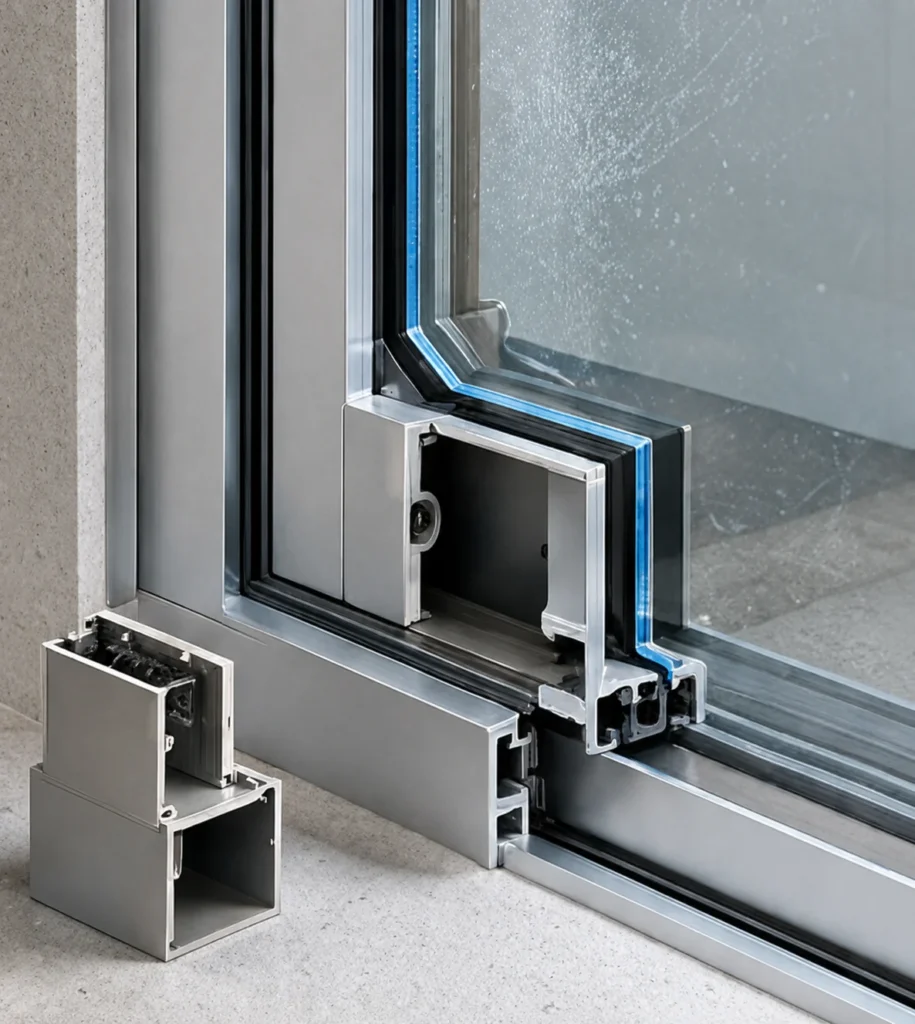
A security film can hold shattered glass together, but that does not automatically mean the glass will stay inside the window opening during an attack. Once the pane breaks, the connection between the filmed glass and the frame becomes a major part of the security system.
That is why forced-entry protection should never be judged by film alone. For a commercial building window tint security project, the film, glass, frame, adhesive, attachment method, and overall glazing condition must work together.
Security film is designed to help retain broken glass. A properly selected attachment system goes one step further by connecting that filmed glass to the surrounding frame, helping the glazing remain in place longer when it is repeatedly struck. Major security-film manufacturers also treat frame attachment as an important part of break-and-entry applications.
Why Security Film Alone Is Only Part of the System
Think about what happens when ordinary glass receives a heavy impact. The glass may crack or break, and loose pieces can fall away from the opening.
Security film changes that behavior by bonding to the glass surface. When the glass breaks, the film helps keep many of those fragments together as a flexible sheet instead of allowing them to immediately separate.
But there is another question:
- What keeps that filmed sheet connected to the frame?
Without suitable perimeter attachment, the glass-and-film sheet may still separate from the edge or be pushed out of the frame under enough force. The film may still be holding the broken glass, but the opening itself can become exposed.
What Is a Window Film Attachment System?
A window film attachment system creates a stronger connection between the filmed glass and the existing window or door frame.
Instead of relying only on the film's bond to the glass, the perimeter of the filmed pane is mechanically or adhesively connected to the frame. Common approaches include wet-glaze structural attachment and profile-based systems, depending on the glazing configuration and tested system requirements.
The basic idea is simple:
- Glass receives the impact.
- Security film helps retain the broken glass.
- The attachment system helps keep that retained glass connected to the frame.
When these components are properly matched, they function as a glazing system rather than as separate products.
Film Only vs Film With Frame Attachment
| Area | Security Film Only | Film With Attachment System |
|---|---|---|
| Broken glass retention | Helps hold shattered glass together | Helps hold shattered glass together |
| Connection to frame | Depends heavily on existing edge condition | Creates a designed film-to-frame connection |
| Forced-entry planning | Film is only one component | Treats glass, film and frame as one system |
| Frame condition | Important | Critical to attachment performance |
| Specification approach | Product-focused | System-focused |
| Best evaluation method | Film data alone is not enough | Review the tested glazing configuration |
This does not mean security film without attachment has no value. It means forced-entry protection should not be reduced to film thickness, tensile strength, or a marketing claim.
Why Can the Frame Become the Weak Point?
Imagine hitting a pane until the glass fractures. The film may successfully keep those fragments bonded together. However, if the edges of that filmed pane are not adequately retained, continued impact can place increasing stress around the perimeter.
Eventually, the attacker may not need to tear through the center of the film at all. Creating enough separation around the edge can provide another path into the opening. This is why frame type and condition should be reviewed before selecting a forced-entry system.
Aluminum storefront framing, glass doors, curtain-wall systems, interior glazing, insulated glass units, and other commercial assemblies can all behave differently.
Our products
Six film families, one for every kind of glass
For commercial glass safety and security, start with Safety and Security. Every family has its own page with the full range.
- Clarity IR Max
- Nano Ceramic
- Climate IQ 50
- Skyline
- Harmony DR
- Soft Tone
- Eco Silver 20
- X-Clear 70
- X-Eco Silver 15
- X-Hybrid DR 15
- Safety 4 Clear
- Security 8 Clear
- Security 8 Silver
- Security 14 Clear
- X-Safety 7
- AG 6 Clear
- Frost
- White Out
- Black Out
- Poly Layers
- V6 Comfort BLK
- V10 Ceramic IR BLK
- V16 Ceramic IR MAX
- V6 Core
- V10 Reactive
- V16 Velocity
Forced-Entry Protection Is About Delay, Not an Unbreakable Window
Security window film should not be presented as making ordinary glass impossible to break. The more accurate goal is forced-entry delay. An intruder may still be able to damage the glass. The purpose of the security glazing system is to make creating a usable opening more difficult and require additional impact, effort, and time.
That distinction matters for retail stores, schools, offices, financial facilities, government properties, dealerships, healthcare buildings, and other locations where exposed glazing may form part of the building's security plan.
What Should Be Checked Before Specifying an Attachment System?
There is no single attachment detail that should automatically be used on every commercial window. A proper specification should begin with the existing glazing.
A. Glass Type
Annealed, tempered, laminated, and insulated glass do not behave exactly the same way after impact.
The film and attachment strategy should therefore match the actual glass construction rather than relying only on the dimensions of the window.
B. Window or Door Frame
The attachment system ultimately transfers loads toward the frame.
Frame material, condition, depth, geometry, seals, existing gaskets, and surrounding construction can all affect whether a particular attachment approach is suitable.
C. Attachment Method
Depending on the system, the film may be connected to the frame with a compatible perimeter sealant or a purpose-designed profile.
The selected method needs to work with the film, glass, frame, and intended security objective.
D. Existing Glazing Condition
Damaged frames, deteriorated seals, loose components, or other glazing issues may need attention before a security upgrade is specified.
Adding stronger film does not repair weaknesses elsewhere in the opening.
Can Security Film Also Provide Solar Control?
Some commercial film systems combine security characteristics with solar-control properties. This can be useful when a building has more than one concern, such as vulnerable exterior glazing combined with excessive glare or solar heat.
However, security performance and solar performance should still be reviewed separately. A film that performs well for heat control is not automatically a forced-entry solution, just as a security film should not be selected only because its appearance matches an existing tint.
For a window tint commercial building project involving security, start with the required glazing performance and then determine whether additional solar or visual-control features can be included.
Keep reading
More commercial safety and security guides
Why Tested Systems Matter More Than Marketing Numbers?
It is easy to compare security products using film thickness, tensile strength, tear resistance, or similar figures. Those numbers can describe the material, but they do not tell the whole story of what happens to a framed glass opening during repeated impact.
Forced-entry events involve the glass, film, attachment, frame, and impact pattern working together. Industry technical guidance warns against using individual physical film properties alone as proof of forced-entry performance and instead points buyers toward relevant system testing.
For architects, consultants, facility managers, contractors, and security professionals, this changes the specification conversation.
Do not ask only:
- "Which film is the strongest?"
Also ask:
- What glass was used in the tested assembly?
- What type of frame was used?
- Was a perimeter attachment included?
- Which attachment method was tested?
- Does the proposed installation match the tested configuration?
- What performance standard or test method applies?
- Are there limitations for the existing glazing?
These questions provide much more useful information than film thickness alone.
Where Forced-Entry Window Film Is Commonly Considered
Security glazing upgrades may be considered anywhere large areas of accessible glass create a vulnerable point in the building envelope.
Common applications include:
- Retail storefront windows and entrance doors
- Schools and educational facilities
- Office entrances and ground-floor glazing
- Banks and financial branches
- Healthcare and clinic entrances
- Government and municipal buildings
- Auto dealerships and showrooms
- Places of worship
- Multifamily common areas
- Reception areas and public-facing facilities
Every building still requires its own assessment. A solution suitable for a retail storefront may not be appropriate for another frame, glass type, or security objective.
What About Multi-Site Commercial Tint Projects?
Larger property groups may be dealing with dozens or even hundreds of individual panes across different buildings. Documentation becomes important because glass type, frame condition, dimensions, film requirements, and attachment details may vary from one location to another.
A dealer managing large portfolios may use a commercial tint CRM system or another project-management platform to organize surveys, glazing information, product selections, site stages, and follow-up documentation.
The software itself does not determine security performance, but organized project data can help keep multi-location specifications consistent.
FAQ
Frequently asked questions
Quick answers about forced-entry attachment systems for commercial glass.
Still have a question? Ask usDoes security window film stop someone from breaking the glass?
No. Security film does not make ordinary glass unbreakable. The glass can still fracture after impact. The film is designed to help retain broken glass, while an appropriate attachment system can help keep the filmed glass connected to the frame for longer during an attempted breach.
Why is attachment important if the film already sticks to the glass?
Because bonding film to glass and anchoring that filmed glass into the window frame are two different jobs. The film can hold fragments together after breakage. The attachment system helps address the perimeter where the broken filmed pane meets the frame.
Is thicker security film always better for forced-entry protection?
Not necessarily. Thickness is only one property. Glass type, frame construction, film design, attachment method, glazing condition, and tested system configuration also influence how an assembly behaves.
Can an attachment system be added to every commercial window?
Not every window or frame should automatically receive the same attachment design. The existing glazing should be reviewed so that the attachment method is compatible with the glass, frame, seals, construction, and intended security application.
Is commercial window tint the same as security film?
No. Commercial building window tint can refer to solar, glare-control, decorative, privacy, or security films. A security application requires products and system details intended for glass retention and the relevant threat or performance objective.
Is frosted window film suitable for forced-entry protection?
Standard commercial window frosting film is primarily used for privacy and decorative control. If security is also required, the glazing should be evaluated separately and a suitable safety or security system specified rather than assuming ordinary decorative frosting provides forced-entry resistance.
Can security film replace alarms, access control, or other building security?
Security film should normally be treated as one layer within a broader security strategy. Doors, locks, access control, alarms, surveillance, lighting, response procedures, and the surrounding building design may all play different roles. Window film mainly addresses the behavior of vulnerable glazing.
Contact us
Worried about exposed glass? Tell us about the building.
Send us which glass worries you most, the type of doors and frames and what you want to protect against, and we will point you to the right next step.
Contact us-
Visit
12551 Steepleway Blvd SWB B101
Houston, TX 77065 - Hours Mon to Fri 9am to 5pm